Breathable House Slippers: Thermal Regulation for Importers
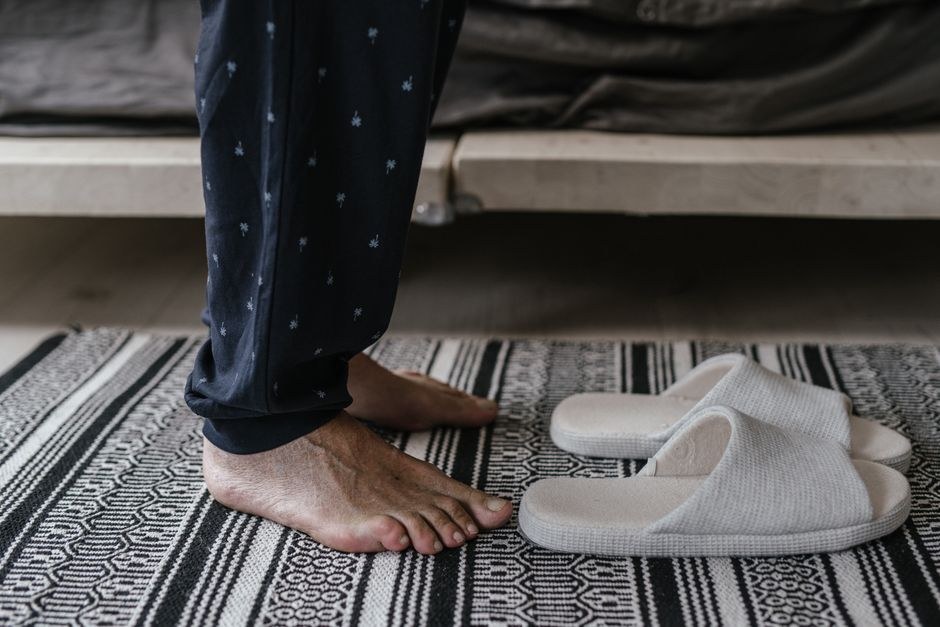
Breathable house slippers sell better in warm and mixed climates. A buyer's guide to thermal slipper materials, moisture management and testing specs.
Most slipper complaints a buyer hears are not about sole thickness or stitching. They are about feet that get hot, damp or cold within twenty minutes of putting the product on. That is a thermal regulation problem, and it is largely decided at the material selection stage, long before a factory cuts the first upper.
If your market includes Australia, the Gulf, Southern Europe, the US Sun Belt or any climate with mild winters and humid summers, this is the difference between a reorder and a return. Breathable house slippers are not a niche; they are what a large share of your customers actually need, and most catalogues over-index on warm, closed constructions because those photograph better.
Thermal slipper materials: what actually moves heat and vapour
Every slipper is a stack: outsole, midsole or insole, upper, and lining. Heat and moisture have to pass through or around that stack. Three variables control whether they do.
- Air permeability of the upper. A knit, open-weave cotton or mesh panel lets warm air escape. A coated PU or dense microfibre traps it. This is usually the single biggest factor.
- Foam structure in the insole. Open-cell memory foam breathes; closed-cell foam insulates. A 45D open-cell insole behaves very differently from a 60D high-rebound block even at similar thickness.
- Lining construction. Fleece and sherpa are insulators by design. Terry cotton and bamboo blends wick and dry faster, which matters more in humid conditions than in dry cold.
For warm-climate retail ranges, the honest answer is usually a cotton or linen-blend upper, a thin open-cell insole, and either an unlined interior or a light terry lining. That is not the most luxurious-feeling combination in the showroom, but it is the one that survives a summer of daily wear without smelling like a gym bag by week three.
Moisture wicking slippers: the spec sheet that separates good from bad
Moisture management is where most supplier conversations become vague. Ask a factory "is this breathable?" and you will get a yes. Ask for numbers and the conversation gets useful.
What you can reasonably ask for on a custom programme:
- Fabric composition and weight per square metre for the upper, with the supplier's own test report if a breathability figure exists.
- Insole foam type, density and whether it is open or closed cell.
- Lining composition and, for terry or bamboo blends, an absorbency or drying-time figure if the mill provides one.
- Adhesive type and coating weight on the insole bonding, because a heavy glue layer is a vapour barrier nobody mentions.
For moisture wicking slippers aimed at hotels, spas or warm-climate retail, the practical benchmark is that the upper should allow noticeable airflow when you hold it up to a light source and breathe through it. It sounds unscientific. On the factory floor it is a fast, repeatable filter that eliminates the coated, plasticky uppers that fail in the field.
Two structural details are worth specifying in your tech pack. First, use a mesh or ventilated side panel rather than a fully closed upper. Second, specify an unsealed or perforated insole edge so the foam can release vapour rather than sealing it under the foot.
Where insulated slippers win, and where they cost you
None of this means you should abandon warm constructions. Fleece, sherpa and thick memory foam sell extremely well in Northern Europe, Canada, the northern US, Korea and Japan from October through February, and the perceived comfort of a deep foam bed is a genuine selling point.
The mistake is trying to serve both markets with one SKU. A single slipper that is warm enough for a Nordic winter and cool enough for a Florida summer does not exist. Buyers who try to force it usually end up with a product that is too warm in June and not warm enough in January — the worst of both.
A cleaner approach, which works especially well for private label and hospitality programmes:
- A closed, fleece-lined winter build with a deep insole for cold-climate retail.
- An open, cotton or mesh build with a thin insole for warm-climate retail and hotel amenity use.
- A mid-weight terry build for transitional seasons and sp
Hotel and spa slippers need a different thermal brief
Hospitality buyers should weight this differently from retail. A spa slipper is worn for an hour, frequently by guests who have just showered, in a humid or warm indoor environment. Breathability and drying time matter more than insole depth. An unlined terry or waffle cotton slipper in white or a neutral tone usually outperforms a plush closed model in guest satisfaction and in laundry cycle cost.
For hotels in hot climates, ask your factory about a mesh or open-weave option and confirm whether the material survives a commercial laundry cycle without shrinkage or colour shift. That test is worth running on a pre-production sample rather than discovering it after a season of complaints.
Practical advice before you place the order
Start by writing your target climate and use case into the brief explicitly, not leaving the factory to guess from a photo. State whether the slipper is for a heated indoor winter market, a humid summer market, a hotel spa or an all-season retail line, and let the material recommendations follow from that.
Next, ask for a wear test rather than only a visual sample. Two or three people wearing the pair for a full day in normal indoor conditions will tell you more about heat and moisture behaviour than a cushion-press test ever will. If the sample gets clammy within two hours, the production run will too.
Finally, keep the thermal spec inside the tech pack for every reorder. Factories change fabric suppliers more often than buyers expect, and a mill swap on the lining or upper can quietly undo a breathability spec that everyone agreed on twelve months ago. A one-line note on permeability and lining composition per reorder is cheap insurance. If a factory pushes back on documenting it, that is a signal about how they will handle the next specification you care about.