Slipper Manufacturer Quality: How to Evaluate Samples and Standards
Learn how to assess slipper manufacturer quality by evaluating samples and on-site production standards, so you avoid costly surprises and get consistent orders.
Ask for a sample before you commit to a full order, and you will quickly learn more about a slipper manufacturer's quality than from any brochure. The sample is your first and cheapest quality control checkpoint. If the sample arrives with crooked stitching, a chemical smell, or a sole that peels away from the upper, the factory either cannot execute your design or is hoping you will not notice. Either way, you need to know before you pay a deposit. This guide covers how to judge a sample and how to check that the factory can repeat that quality across thousands of pairs.
What to Check When You Evaluate Slipper Samples
Start with the uppers. Run your thumb along every seam. Stitching should be straight, with no skipped stitches or loose threads. On a cotton or plush upper, the nap should be even and free of bald patches. If the design has embroidery or a printed logo, check that the edges are sharp and the colours match your artwork. A sloppy logo is a sign the factory rushed the sample—and will rush production.
Next, inspect the sole and insole. Bend the slipper in half and release it. It should spring back without leaving a crease. Press your thumb into the memory foam insole—it should recover slowly, not stay compressed. Check the bonding between the sole and the upper by trying to insert a fingernail at the join. If it lifts easily, the glue or stitching is insufficient.
Finally, look at the overall finishing: loose threads, uneven trims, glue marks, and odour. Some odour from fresh materials is normal, but a sharp chemical smell that persists after airing out for 24 hours indicates cheap adhesives or poor ventilation during production.
Going Beyond the Sample: Evaluating Slipper Manufacturer Quality in Production
A good sample does not guarantee a good bulk order. You need to verify that the factory has systems to maintain consistency. Ask for a copy of their internal quality control (QC) checklist. A professional factory will have documented checkpoints for incoming materials, in-line inspection, and final inspection. If they hesitate to share, that is a red flag.
Discuss how they handle material variation. Natural materials like cotton and wool vary between lots. Ask how they ensure colour consistency across dye lots. For memory foam, ask about density and compression set testing. A factory that cannot explain these basics is not thinking about quality beyond the sample room.
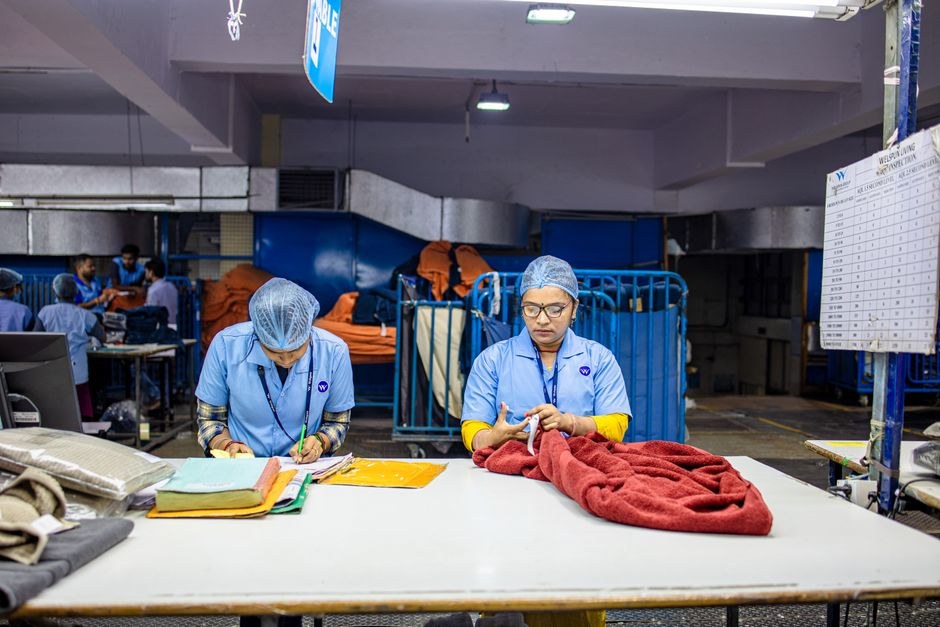
If possible, visit the factory or hire a third-party inspector. Look at the production floor: are workers trained, are machines maintained, is the space clean and organised? Check the warehouse for material storage—are fabrics kept off the floor and away from moisture? These details affect every pair you receive.
When you evaluate slipper samples, also consider the packaging. A sample shipped in a poly bag and a plain box might be fine, but if you ordered custom packaging, does the sample reflect that? Ask for a packaging mock-up if your order includes retail boxes or hang tags. Poor packaging can damage slippers in transit and disappoint your customers.
Slipper Production Standards: What to Put in Your Spec Sheet
To protect yourself, your purchase order should include a detailed spec sheet. This document defines what you expect, and it becomes the reference for any quality dispute. Include:
- Material composition (e.g., 100% cotton upper, 60% cotton / 40% polyester lining, memory foam density of 45D)
- Dimensions (length, width, sole thickness)
- Stitching requirements (stitches per inch, seam type)
- Colour references (Pantone numbers for solid colours, lab dips for prints)
- Performance tests (e.g., sole flex test, colourfastness, slip resistance)
- Packaging specs (poly bag thickness, box dimensions, labelling)
- Sampling plan and acceptable quality limit (AQL) for defects
Send this spec sheet to the factory before they make the sample. A reputable manufacturer will review it and either confirm they can meet it or suggest modifications. If they ignore it and simply send a generic sample, they are not listening.
Also clarify who pays for sample development and whether the sample cost is refundable against the bulk order. This sets expectations for future changes. If you need to revise the sample, ask about turnaround times and costs. A factory that charges excessively for minor tweaks is likely to nickel-and-dime you later.
Deciding Whether the Factory Can Scale Without Quality Drift
Once you have a sample you like, the real test is whether the factory can reproduce it at scale. Ask for a production timeline with QC checkpoints. For a first order, request a pre-production sample made on the actual production line. This reveals whether the sample room and the production floor are aligned.
If you cannot visit, arrange for a third-party inspection during production. Inspectors can catch issues early, when they are cheaper to fix. Choose a service that provides detailed reports and photos. Review the report carefully, and do not accept vague statements like “minor defects found” without photos.
Consider a trial order before committing to a large volume. A smaller order tests the factory’s reliability, communication, and ability to meet deadlines. If they perform well, you can scale up. If they stumble, you have limited your risk.
Practical Steps Before You Place a Bulk Order
Here is a checklist to use with any new slipper manufacturer:
- Request a sample made to your exact specs, not a stock item.
- Inspect the sample using the points above, and document any issues with photos.
- Ask for the factory’s QC procedures and sample inspection reports from previous orders.
- Clarify material sourcing and how they handle lot-to-lot variation.
- Agree on a detailed spec sheet and attach it to your purchase order.
- Arrange a pre-production sample and, if possible, a third-party inspection.
- Start with a trial order to assess consistency and communication.
Finally, keep a record of every sample and its evaluation. If you later face quality problems, you can compare the bulk shipment against the approved sample. This protects you in negotiations and helps the factory understand what went wrong.
Evaluating a slipper manufacturer is not about finding the cheapest quote—it is about finding a partner who can deliver the same quality every time. By focusing on samples and production standards, you reduce the risk of returns, chargebacks, and unhappy customers.