MOQ Strategies for Custom House Slippers: Balancing Cost and Flexibility
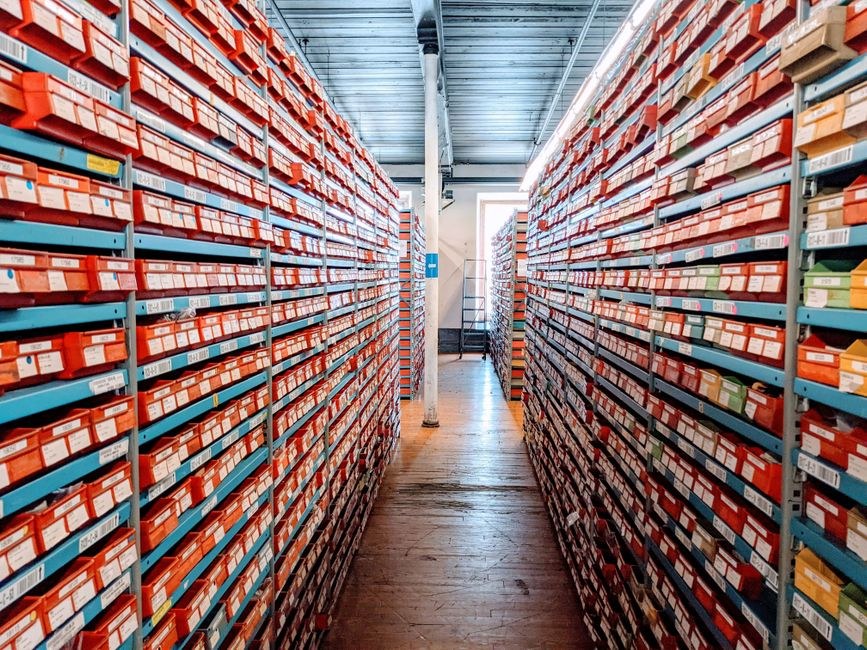
Actionable MOQ strategies for custom house slippers: combine styles, negotiate tiered pricing, build flexibility without sacrificing unit cost.
Most buyers treat MOQ as a wall. It isn't. It's a price signal — and once you understand what sets it, you can move it. Here are the strategies that work when sourcing custom house slippers, beyond simply asking the factory to lower the number.
Why MOQ Is a Cost Signal, Not a Policy
A factory quotes a minimum order quantity because below that line, the order stops covering the fixed costs of running it. Setup on a die-cutting press, a cutting table changeover, a separate dye lot, a different carton print, an extra QC checkpoint — none of these care whether you order 500 pairs or 5,000. Spread across 5,000 pairs they're noise. Spread across 500 they're the whole margin.
So when a supplier tells you their MOQ is 2,000 pairs, they are not being difficult. They are telling you where your order stops being profitable for them. The question is not how to argue the number down — it's how to change the order so the number can come down on its own.
Strategy 1: Combine Styles to Reach a Tier
This is the single most effective lever, and most buyers ignore it because they are thinking in SKUs rather than in production runs. If your MOQ is 2,000 pairs per style but the actual constraint is total volume through the line, two styles at 1,000 pairs each may run as one production block with a single setup.
How to make it work for you:
- Keep the sole, insole and packaging format identical across styles. The upper changes; nothing else does.
- Offer a tight colour palette — three to four upper colours covering both styles.
- Avoid mixing constructions. A cotton slipper and a moulded memory foam slipper are not the same run, and a factory will rightly quote them separately.
Say a mid-size supermarket chain wants two house slipper designs for a spring promotion — a closed-back and a cross-band scuff. Quoted individually, each carries a 2,000-pair minimum and only one is worth tooling. Quoted as one run on a shared sole, both go to production at a lower combined MOQ because the factory's changeover is absorbed once.
Strategy 2: Negotiate Tiered MOQ Against Tiered Pricing
The cleanest negotiation is not "lower my MOQ." It is "show me the price at three volumes." Ask for a ladder — for example, price at 1,000, 2,500 and 5,000 pairs — and you will usually find the factory's real breakeven point in the middle of it.
Two things follow from that ladder:
- You can place a first order at the low tier to test the market, accepting a higher unit cost on a small quantity.
- You can then commit to the mid tier for a repeat order, with the pricing already agreed.
Factories respond well to this because it converts a one-off small order into a forecast they can plan around. If you can offer a rolling twelve-month view, even a non-binding one, you have something to trade.
Strategy 3: Use Stock Materials and Standard Packaging
A large share of the cost that sits under an MOQ comes from non-standard inputs. Custom-dyed fleece, a bespoke printed box, a branded woven label produced separately — each of these carries its own minimum, frequently higher than the slipper MOQ itself.
If flexibility matters more than full customisation in your first order, push the customisation to the points where it's cheap:
- Choose uppers from the factory's existing fabric range rather than commissioning a dye lot.
- Use a standard hangtag or sticker for branding instead of a printed box.
- Accept a neutral or factory-standard polybag, and handle retail packaging locally if your market allows it.
None of this prevents a genuinely custom slipper. It sequences your spend so that the first order is smaller and the second order is where you invest in proprietary detail.
Strategy 4: Split the Order Across a Season
If a supplier resists a small first order, propose a split shipment: 40% now, 60% in eight to ten weeks. The factory schedules the full run, buys material at full volume, and you commit early enough to give them certainty — while your cash outlay is staged and your first batch reaches the market sooner.
This works best for year-round programs. For tight seasonal windows, the lead time may not allow it, so check the calendar before proposing a split.
What to Do on Your Next Enquiry
Approach your next supplier conversation with four questions. What is the MOQ per sole and construction? What is the price at the tier below and the tier above? Which components carry their own minimums? And what volume commitment would move the number?
Then decide what you can genuinely trade — volume, timing, standardisation, or commitment across seasons. Buyers who bring one of those to the table get a different conversation than buyers who simply ask for less. The MOQ doesn't disappear. It becomes a number you set together.