Non Slip Slipper Soles: Choosing the Right Outsole for Your Market
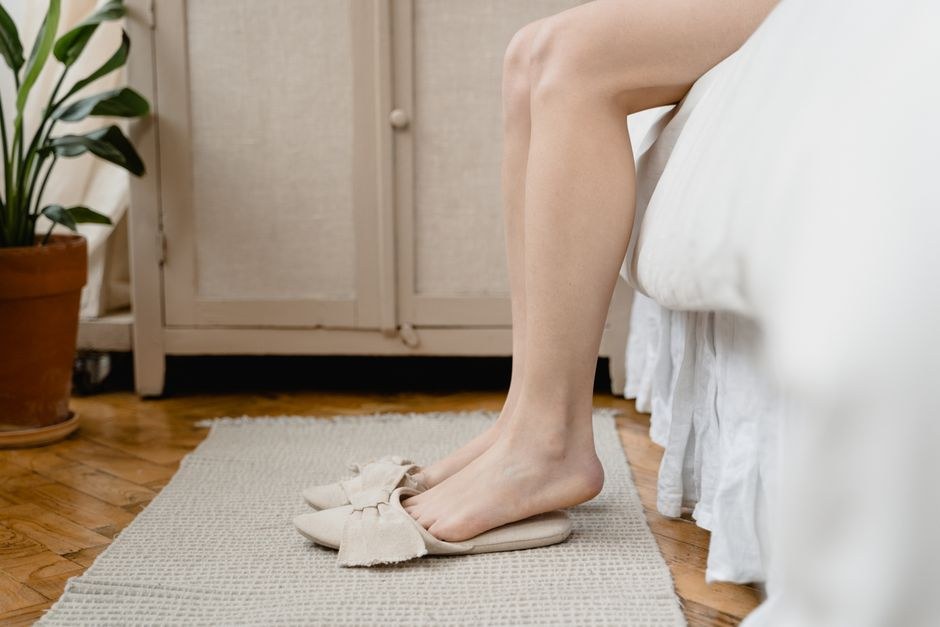
A buyer's guide to non slip slipper soles: compare TPR, rubber, EVA and PVC outsole materials, testing standards, and outsole design for grip and durability.
Most importers brief the factory on the upper — cotton, fleece, or terry — and skip the outsole entirely. That's backwards if your market is Europe, or if your customers are older shoppers who care about falling. Non slip slipper soles are usually the single most expensive component after the foam, and they're the one that quietly decides your test-outcome risk. Get the sole right, and your retailer stays happy all season; get it wrong, and you test-fail at the port with containers already booked.
Start With the Outsole Decision, Not the Fabric
The upper sells the slipper. The sole keeps it out of the returns bin. In custom house slippers, outsole choice affects three things simultaneously: unit cost, compliance risk, and whether a plush pair feels stable on tile. Buyers who treat the sole as an afterthought after the design is locked often find their factory resampling the whole article once the lab flags slippage.
If your channel is general retail or Amazon, slipper outsole materials and the safety claims attached to them are where compliance scrutiny is highest. A marketing claim like "non-slip" is treated as a performance claim in several markets and needs a test file behind it, not just a nice outsole profile.
Which Slipper Outsole Materials Match Your Use Case
There are four families you'll encounter in quotes from any Ningbo slipper factory. Each has a different price point and behaviour on wet tile, dry tile, and textured floor.
- TPR (thermoplastic rubber) — the default for mid-priced household slippers. Good wet and dry grip, reasonably durable, works well with a defined tread pattern. The trade-off: slightly heavier and less soft underfoot than EVA, and more sensitive to over-curing at the factory. This is the workhorse material for imported slippers sold in volume.
- Soft rubber — better abrasion resistance and better grip on wet bathroom tile than TPR, but at meaningfully higher cost. Usually the right choice for hotel slippers expected to be washed repeatedly, or for a premium retailer who emphasises longevity.
- EVA — lightweight and cheap, comfortable in a spa-style slipper. Very poor wet grip on smooth floors. Fine as a poolside or hotel-room option with a disclaimer; a gamble as a general household non slip claim.
- PVC — cheap and stiff. Rarely the right answer for retail unless you're selling a very low price point and accepting the durability trade-off.
Wholesale programmes that rely on a household safety angle — cottochi, geriatric-focused retailers, and supermarket seasonal aisles — almost always settle on TPR or soft rubber. Spa suppliers can often downgrade to EVA because the wearing context is different.
Test Your Outsole Against Real Floors, Not the Lab Floor
Rough house slipper grip is measured by coefficient-of-friction tests. Various labs, buyers, and retail groups run them differently, and the pass line differs by market. The point isn't to memorise a number; it's to know that a test result applies to the specific floor condition it was run on. A sample that passes on dry quarry tile can fail on wet ceramic.
What actually moves the result is a combination of three variables:
- The rubber or TPR compound itself — hardness, filler content, and cure.
- The tread pattern — siping, grooves, and channel depth.
- The contact area — a flat outsole can behave worse than a slightly cupped one on wet surfaces.
When you commission a sample, ask for the outsole to be tested or reviewed against wet smooth ceramic and dry tile, not just one condition. If your supplier cannot describe how the tread drains water away from the contact patch, that tells you something about how focused their outsole development actually is.
Design Details That Decide Real-World Grip
Buyers often ask for a deeper tread as a generic uprating. Deeper grooves help, but a shallow tread with a proper siping pattern frequently outperforms a coarse tread because it clears water more effectively. Relevant design details to settle with the factory:
- Tread depth: shallow enough to avoid ground feel on hard floors, deep enough to channel water. Ask the factory what they use for the target floor scenario.
- Siping: fine diagonal cuts across the block tread, typically the biggest single improvement in wet grip.
- Outsole thickness: thinner undersoles flex more but can rub through faster; thicker adds stability and cost.
- Bonding: the join between midsole and outsole is where creep starts. Ask how bonding is inspected during and after assembly.
If wet grip is a stated selling point, treat it as a design input from day one — not a coat of rubber added after the upper is approved.
Compliance and Labeling Under the Non-Slip Claim
Markets treat "non-slip" differently. In the EU, safety claims can invite scrutiny under general product safety rules, and the burden sits on you, the brand owner, to substantiate them. In the US, state-level and retailer-specific requirements vary. Some Asian markets have their own listed footwear performance standards.
The practical consequence: if the claim is on the box or the product listing, you need a test file. That means either a test report from a recognised lab, in-house measurements kept on file, or a documented supplier declaration, depending on your channel. Ask your non slip slipper soles supplier which test method they use, and whether they can produce consistent evidence across follow-on orders — not just a one-off report for the first PO.
What to Specify Before You Place an Order
Once you've chosen material, lock the outsole specification in the tech pack rather than relying on what was signed off in the sample. Written specs protect you on reorders, and 'same as last time' is not a spec.
- Material: TPR, soft rubber, EVA, PVC — grade and supplier if the factory uses one.
- Tread pattern: reference drawing or image, plus tread depth.
- Outsole durometer (hardness) — the factory can supply their target value.
- Bonding method and any internal bond-strength check.
- Size range and any scaling effect on tread design points.
- Expected use conditions: dry home floors, wet bathrooms, or both.
The quiet operational value of specifying all this is speed. When something goes wrong on the next reorder, you can lift outsole samples from stock and verify before a container leaves. Without the written outsole spec, you're back to sampling twice a year and hoping.