OEM House Slippers from Ningbo: A Complete Guide for Importers
A practical overview of sourcing OEM house slippers from Ningbo: factory types, costs, sampling, QC, and logistics for importers.
Ningbo is where most of the world's house slippers are made, and that concentration is either a huge advantage or a trap — depending on how you approach it. If you are sourcing oem house slippers for the first time, or moving from a trading company to a direct factory, this guide gives you the full picture without the sales pitch.
What a Ningbo Slipper Factory Actually Does for You
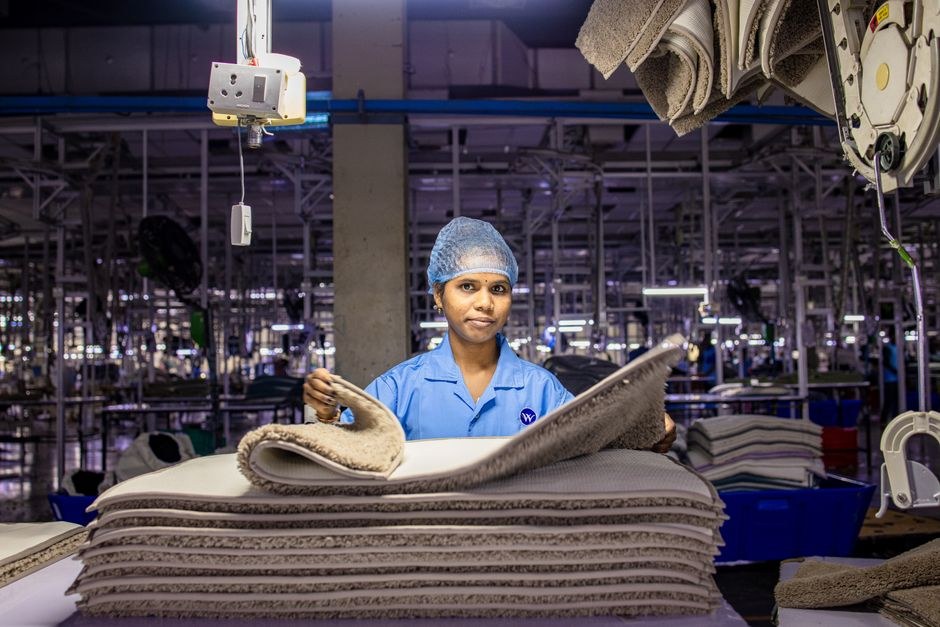
A real Ningbo slipper factory is not just a sewing floor. The ones worth working with handle pattern making, material sourcing, lasting, sole attachment, trimming, packing, and export documentation under one roof. That vertical setup matters when you need a sample changed quickly or a packing detail adjusted without another round of emails between three subcontractors.
When you work with an OEM partner, you bring the design intent — silhouette, materials, branding, packaging — and they bring the engineering. ODM is different: you pick from existing molds and constructions, then customize colors, logos, and packaging. Most importers start with ODM to test a market, then move to full OEM once volumes justify custom tooling.
What to confirm before you commit:
- Do they own their sole molds, or do they rent time on someone else's line?
- Can they cut and sew uppers in-house, or is that subcontracted?
- Is there a dedicated sampling team, or does the production manager squeeze samples between bulk runs?
- Do they have an export license and a track record with your destination market's labeling rules?
A factory that ticks all four is rare. Two or three is workable if you manage the gaps. None means you are talking to a broker.
Costs, MOQs and What Drives Your Landed Price
Importers usually ask for a price per pair before they have defined the product. That is backward. The number depends on materials, construction complexity, sole type, packaging, and order quantity — in that order. A basic open-toe terry slider and a memory foam mule with a molded EVA sole and custom printed box are different products in every sense.
MOQ is the second question. For a Ningbo slipper factory running standard molds, 1,000 to 3,000 pairs per colorway is common for ODM. Full OEM with new tooling pushes that up, sometimes significantly. If your volumes are lower, ask about shared molds, stock fabrics, and neutral packaging — these are the levers that bring MOQ down without cutting quality.
Landed cost has four parts: ex-works price, freight, duty, and the hidden cost of poor QC. The last one is the most expensive. A container of slippers with weak stitching or a sole that separates after a month of wear will cost you more in returns and reputation than any supplier negotiation will save.
Sampling, QC and the Timeline You Should Plan For
Sampling is where a good factory separates itself. Expect two to three rounds for a new OEM design: first sample to check silhouette and materials, second to correct fit and finish, third for pre-production confirmation. Each round takes roughly one to two weeks depending on material availability.
For quality control, decide early whether you will use the factory's in-house inspection or a third-party. In-house is faster and cheaper but not independent. Third-party adds cost and lead time but gives you documented evidence for claims and chargebacks. For first orders with a new supplier, third-party inspection on the bulk production is cheap insurance.
Typical timeline for a new OEM order:
- Brief and quote: 3–7 days
- Sampling rounds: 2–4 weeks
- Material procurement: 1–3 weeks
- Bulk production: 25–40 days
- Inspection and packing: 3–5 days
- Booking and sailing: 1–2 weeks
Add buffer for Chinese New Year and peak season. If you need goods on a shelf by October, you are placing the order in spring, not summer.
Practical Advice Before You Import Slippers from China
Do not start with a factory visit. Start with a written brief: target retail price, target cost, materials, construction, packaging, quantity, and destination market. A vague brief gets you a vague quote, and vague quotes are how sourcing projects die.
Ask for references from buyers in your region, not just any buyer. A factory that serves European supermarkets may not be set up for North American retail compliance, and vice versa.
Request a pre-production sample against the final spec, not just a development sample. What you approve is what you get — so approve something that matches the bulk.
Finally, treat the relationship as a working partnership, not a one-off transaction. The buyers who get the best pricing, the fastest sampling, and the most flexibility during peak season are the ones who communicate clearly, pay on time, and give their factory enough lead time to plan. That is not sentimentality — it is how capacity gets allocated.