Slipper Packaging Options: Beyond Custom Slipper Boxes
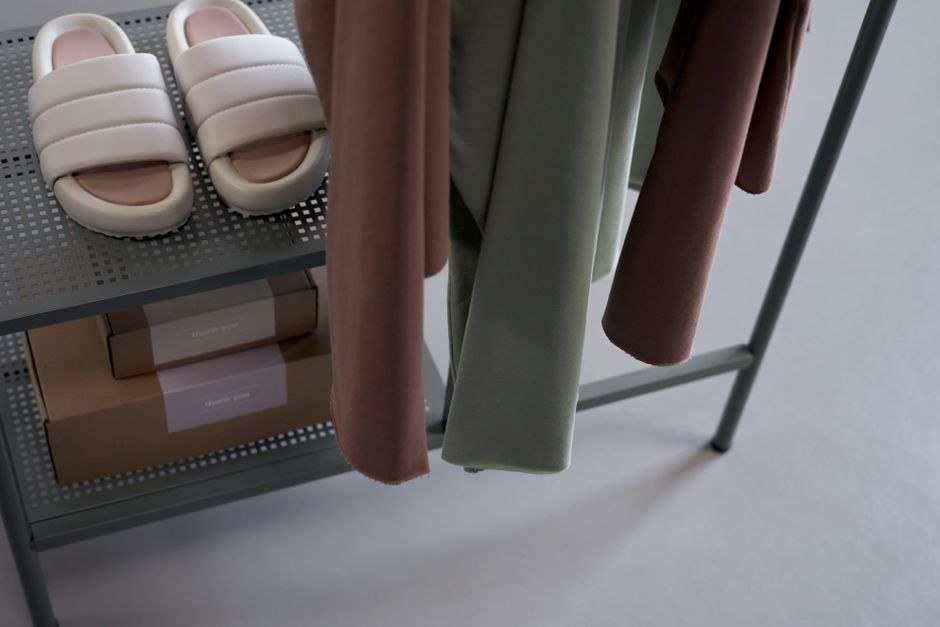
Polybags, hangtags and display cartons often beat rigid boxes on cost and shelf performance. A buyer's guide to slipper packaging options and retail ready slippers.
Rigid custom slipper boxes are usually the most expensive way to pack a pair of slippers, and for many importers they are not even the most effective. If your pairs are heading to a supermarket aisle, a marketplace warehouse or a hotel store room, the box is often the first thing that gets thrown away and the last thing that earns its cost back. What matters is whether the packaging survives the trip, hangs or stands correctly at retail, and lets the consumer understand the product in three seconds.
Below is how the main slipper packaging options actually behave — cost brackets, damage rates, retail fit — and where each one makes sense for a buyer running OEM or private-label orders.
Polybags, Headers and Hangtags: The Working Formats
Most volume slipper orders move in polyethylene bags. The variables are thickness, closure and whether a header card is attached.
- Flat polybag, no header. Cheapest. Used for e-commerce multipacks and for pairs that go straight into a master carton for a warehouse. Note that some markets require suffocation warnings on bags above a certain size.
- Polybag with printed header card. Adds a euroslot or sombrero hole, so the pair hangs on a peg. This is the workhorse format for discount retail and pharmacy chains.
- Header card with a colour-matched hangtag. A second tag on the slipper itself lets the buyer read size, material and care instructions without opening anything. Cheap to print, easy to change between seasons.
For non-slip story-telling at shelf level, a small printed tag flagging the outsole test standard does more selling work than a full-colour lid.
Custom Slipper Boxes: Where They Pay and Where They Do Not
Custom slipper boxes earn their cost in three situations: gift sets, hotel and spa amenity programmes, and premium department-store presentation. Outside those, a folding carton in the same footprint usually does the job at a fraction of the material cost.
If you do go the box route, the practical decisions are fewer than they look:
- Structure. Folding carton with a tuck end is the default. Rigid two-piece with a lid is for gift positioning only, and it roughly doubles outbound carton volume, which you feel on freight.
- Board grade. Heavier board survives better but adds weight per pair across thousands of pairs. Ask for a shipping test, not a spec sheet.
- Inserts. A simple card cradle stops the pair rattling and protects the outsole edge. Skip it only if you have tested drop performance.
- Print method. Offset for large runs with photographic artwork; flexo or digital for short runs and frequent SKU changes.
One caution: any structure where the slipper is visible through a window needs a film that does not scuff during transit. A scratched window is worse than no window.
Building Retail Ready Slippers That Survive the Chain
The phrase retail ready slippers does not mean decorated. It means the unit can go from container to shelf without a repacking step. That has consequences upstream in the factory, and you should specify them at sampling, not after the cartons are printed.
- Barcode placement. Decide whether the FNSKU or retail barcode goes on the polybag, the hangtag or the box, and confirm there is a flat, printable surface. Awkward placements cause scan failures at the warehouse.
- Master carton logic. If the retail unit is a hanging peg pack, the master carton should be an inner shipper that goes straight onto the shelf or into a cage without decanting. This is where real labour savings appear for the retailer.
- Sizing and pairing. Shoe sizes printed on the pack must match the pair inside. Mismatched labelling is a common source of returns and chargebacks.
- Market compliance. Fibre content, country of origin and care labelling depend on the destination market. Confirm the wording with your factory before artwork is locked.
- Drop test. Ask for a simulated transit test on a filled master carton — the pack, not just the product, should survive.
One further point specific to hanging formats: peg hole position has to be consistent across every SKU, or the retailer's planogram collapses and your reorder evaporates.
Matching Packaging to Channel, Not to Taste
Buyers frequently over-specify packaging because a design looks good in a presentation. A simpler rule is to let the channel decide.
- Marketplace and drop-ship. Polybag with a printed insert card, sized to avoid dimensional-weight penalties. Boxes add cubic volume and cost.
- Discount and mid-tier retail. Polybag with peg header, hangtag for size and care, master carton usable as a shelf-ready shipper.
- Premium retail and gifting. Folding carton with insert, consistent colour across the range, possible gift sleeve.
- Hotel and spa. Often a folded wrap or light carton with the property's brand, plus a size and material tag. Durability matters less than consistency, because amenity buyers reorder the same block for years.
The hidden cost in all of this is artwork versions. Every market, every retailer and every season can mean a new plate or a new digital run. Grouping SKUs onto shared artwork, with variable data printed on top, keeps changeover cheap without flattening your brand.
A Practical Way to Decide in One Meeting
Bring three things to your next discussion with the factory: the destination channel, the shelf or peg constraints in millimetres, and a target landed cost per pair. Ask the factory to quote two packaging formats against the same slipper — for example a polybag with header versus a folding carton — including print tooling, carton size and estimated CBM. You will usually see the freight difference immediately and can judge whether the presentation gain is worth it.
Then prototype. Order fifty retail-filled units, not fifty empty packs, and run them through your own warehouse or a friendly retailer's back room. Check hanging, scannability, rattle, and how the pack looks after a week on a shelf. Only after that should you commit tooling and print runs for the season.
Good packaging decisions are made once, early, and with the whole chain in view. Spend the half-day, and you avoid a repack, a chargeback, or a container full of boxes your buyer never wanted.