Custom House Slippers MOQ: Balancing Cost and Flexibility
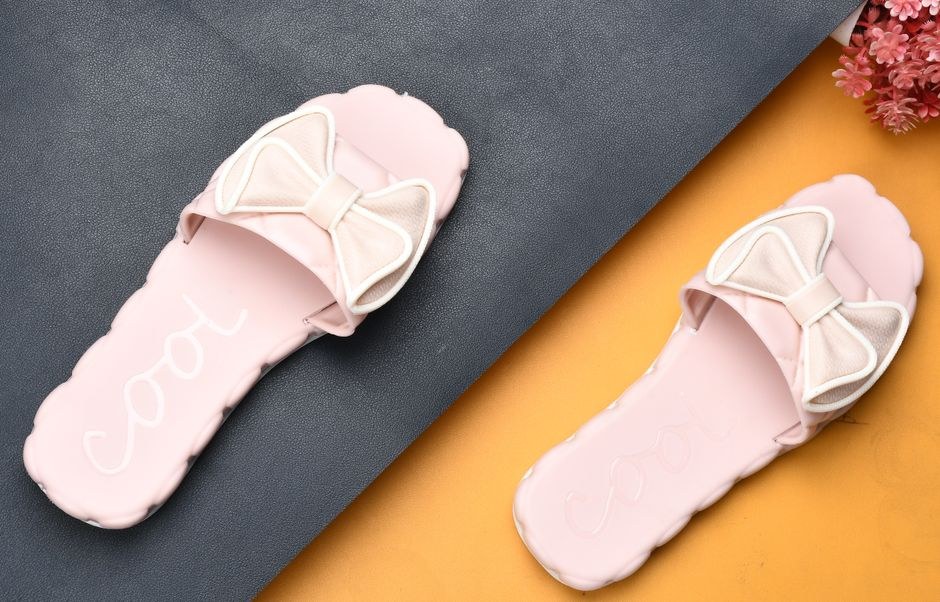
How to negotiate lower MOQs on custom house slippers without hurting quality: split runs, shared materials, and realistic low MOQ slippers planning.
Most buyers asking for a lower MOQ are asking the wrong question. The factory's minimum is rarely a fixed number printed on a wall; it's the point where tooling, material purchasing and a production slot stop losing money. If you understand what sets that point, you can move it. That's what this guide is about: practical tactics for custom house slippers MOQ conversations that keep quality intact and get you a first order you can actually sell through.
Why Low MOQ Slippers Cost More Per Pair
Before you negotiate, price the gap honestly. A lower quantity usually means a higher unit cost, and it helps to know which cost lines are driving it. In most house slipper orders, the fixed costs are moulds and dies for soles, cutting-die sets and pattern grading, plus the setup time on stitching and sole-pressing lines. Those don't shrink when you order fewer pairs, so they get spread across a smaller run.
Material purchasing is the second lever. Fabric, foam and outsoles are bought by the roll, sheet or drum, and mills and material suppliers have their own minimums. If your colour or lining is unique to your order, the factory has to buy the mill's minimum and may carry the surplus as dead stock — which shows up in your price.
So the real question is not "what is your lowest MOQ?" but "which of these fixed costs can we share, defer or strip out?" That reframing is where low MOQ slippers programmes actually get built.
Tactics for MOQ Negotiation Slippers Buyers Can Use
MOQ negotiation slippers orders respond to structure, not pressure. A factory that drops its minimum just to win the order will usually recover the margin somewhere else — thinner foam, slower scheduling, or a rushed inspection. Here are the moves that tend to hold up.
- Split the size run across fewer colours. A single colourway in a full size run is often cheaper to produce at low volume than three colours in half runs, because cutting and stitching setups repeat per colour.
- Use stock materials for the first order. If the factory already buys a certain fleece, coral lining or EVA sheet for other customers, piggybacking on that purchase removes the mill minimum from your quote. Save the bespoke fabric for a reorder.
- Share tooling. Ask whether an existing sole mould can be used with your upper. A new outsole pattern is one of the largest fixed costs at low volume; a new upper on a proven sole is far cheaper.
- Book into a gap in the schedule. Factories run seasonal peaks. If your order can slot in after a big shipment leaves, the production team may accept a smaller run because the line is already set up.
- Commit to a reorder window. A written intention to place a second order within a set period is worth more to a factory than a one-off larger order, because it supports material planning. Put it in writing, but only promise what you can forecast.
Each of these trades something — colour range, fabric choice, timing — for volume flexibility. Decide which trade is acceptable to your market before you start the conversation.
Material Alternatives That Lower the Entry Point
The fastest way to bring a minimum down is to change what goes into the slipper, not how many you order. A few substitutions usually pass unnoticed by the end customer:
- Swap a custom-dyed upper for a stock colour and add your branding on the label, box or footbed print instead.
- Use a standard memory foam sheet grade already stocked by the factory rather than specifying a bespoke density and thickness.
- Choose a standard outsole profile from the factory's existing range for the first run; introduce a proprietary sole once volume justifies the tooling.
- Simplify the construction — fewer panels, a simpler trim — to reduce setup time per pair.
None of these should mean a worse slipper. They mean a slipper whose differentiation lives in branding and comfort rather than in tooling. For a first order testing a new market, that is usually the right trade.
What Not to Trade Away
There are areas where a lower MOQ becomes a false economy. Sole grip and bonding are the main ones: if the factory is cutting corners on adhesive or outsole material to make a small run pay, you will find out through returns. Foam density matters too — a thinner or lower-density insole may feel fine in a sample and flatten within weeks. Similarly, don't accept a compressed inspection process; a small order still needs an AQL check before it ships.
A practical safeguard is to specify these points in writing — outsole material, foam grade, bonding method, inspection level — before the price is agreed. If a factory resists putting them in the spec sheet, that tells you where the saving is coming from. The sample and the spec should match; if they don't, the MOQ discussion is moot.
Building a Workable First Order
Treat the first order as a market test, not a volume play. Your goal is enough pairs to fill a launch, learn the reorder rate and prove the product, while keeping the fixed-cost burden per pair within a range your retail price can absorb.
- Ask the factory to quote three quantities — your ideal, a mid-point and their standard minimum — with a line-by-line breakdown of tooling, materials and production.
- Identify which fixed costs disappear or shrink at the mid-point, and negotiate those specifically rather than pushing on the headline number.
- Match materials to stock wherever the customer won't notice, and reserve custom elements for the reorder.
- Agree the reorder window and quantity assumptions in writing so the factory can plan materials.
- Confirm the inspection plan and spec sheet before paying a deposit.
That sequence gives you a defensible unit cost and a supplier who understands your growth plan. Lean on it for a second order and the MOQ conversation gets easier each time.
Next Steps Before You Request a Quote
Write down your true minimum sellable quantity first — not what you'd like, but what you can move in a season without discounting. Bring that number to the factory along with a clear statement of which materials can flex and which cannot. Ask directly which fixed costs are inflating your quote, and offer one or two trades — timing, colour range, or a reorder commitment — in exchange for a smaller first run. If a supplier won't show you where the cost sits, look elsewhere. The right factory will treat a modest first order as the start of a relationship and price it that way.