In-House vs Third-Party Slipper QC: Which Model Fits Your Order?
Compare in-house vs third-party slipper QC on cost, control, and risk. Learn which slipper inspection model fits your order size and complexity.
The first time a container of slippers arrives with a defect you didn't catch, the argument about in-house vs third-party slipper QC stops being theoretical. One buyer I spoke with—say a mid-size online retailer—had a batch of memory foam slippers where the foam had compressed during transit. Their factory's own QC team had passed the shipment; no third party ever saw it. The cost of replacement and lost sales outweighed any savings on inspection. That is the moment the choice between an in-house QC team and an external inspection firm becomes a business decision, not a philosophical one.
What each slipper inspection model actually covers
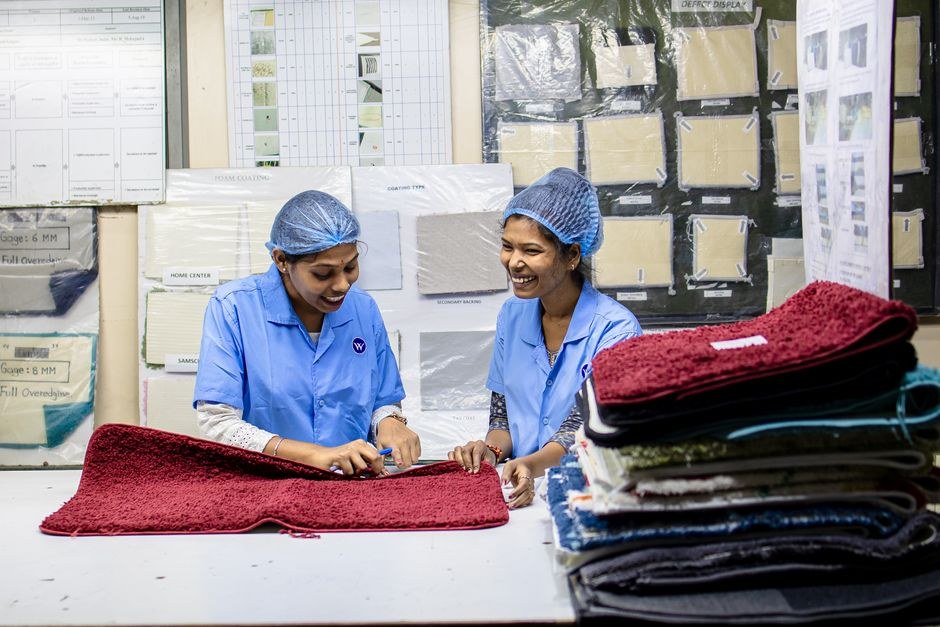
An in-house QC team is employed or contracted directly by the factory. They inspect during production, typically at the end of the line, and sign off before packing. Their advantage is speed and familiarity: they know the product, the line, and the common failure points. The risk is obvious—they are paid by the factory, not by you. Even with the best intentions, there is a structural conflict when a defect means rework or a delayed shipment.
Third-party inspection firms are independent. You book them, you pay them, and they report to you. They arrive at a scheduled point—usually pre-shipment—and apply a standard sampling plan such as AQL. They catch issues the factory might overlook or downplay, but they only see what is in front of them on that day. They do not live with the production line, so they can miss process problems that build up over weeks.
Neither model is universally better. The right choice depends on your order size, product complexity, and how much risk you can absorb.
Cost, control, and risk: a side-by-side view
Cost is the first filter. In-house QC is typically baked into the factory's quoted price—you may not see a separate line item, but you are paying for it. Third-party inspection is an explicit cost per man-day, plus travel if the factory is remote. For small orders, the third-party fee can be a noticeable percentage of the total. For large orders, it becomes negligible.
Control is where the models diverge. With in-house QC, you have indirect control: you set the standard, but the factory executes it. You rely on their honesty and competence. With third-party QC, you have direct control over the inspection scope, timing, and reporting. You can specify exactly what to check—stitching, sole adhesion, foam density, packaging—and get photos and a written report. The trade-off is that you must manage the inspector and interpret the results yourself.
Risk is the third axis. In-house QC is a continuous presence, so it can catch problems early when they are cheap to fix. Third-party inspection is a point-in-time check, usually just before shipment. It catches defects that have already been produced, which means rework or rejection at the last minute. For simple, stable products, a pre-shipment check may be enough. For complex or high-value slippers—say a private-label memory foam line with custom packaging—the risk of a last-minute failure is higher.
Matching the model to your order profile
Use order size as a starting point. Small trial orders or low-MOQ custom runs often cannot justify the fixed cost of a third-party inspection. Here, in-house QC with a clear checklist and a factory that has been vetted can be adequate. But if the product is new or the factory is untested, consider a one-time third-party inspection even on a small order—treat it as a paid sample verification.
For repeat orders with a proven factory, in-house QC can be sufficient if you have a documented quality agreement and periodic audits. The key is not to let the relationship become too comfortable. Schedule a third-party inspection every few shipments to keep the factory honest.
For large, complex, or high-value orders—multiple SKUs, mixed materials, custom packaging—third-party inspection is usually the safer default. The cost per pair is low, and the independent report gives you leverage if something goes wrong. You can also combine models: use the factory's in-house team for routine checks and bring in a third party for final pre-shipment inspection.
Product complexity matters too. A basic cotton slipper with a simple EVA sole has few failure points. A plush slipper with a memory foam insole, non-slip rubber outsole, and embroidered logo has many. The more components, the more you need an independent eye.
Building a house slipper quality control plan that works
Whatever model you choose, the foundation is a written spec. Define the measurable criteria: foam density and rebound, sole hardness, stitching density, color fastness, packaging dimensions. Without this, neither in-house nor third-party QC can do much beyond a visual once-over.
Next, decide on inspection points. For in-house, agree on inline checks at critical stages—after sole attachment, before packing. For third-party, book pre-shipment inspection at 100% production and ensure the factory knows the date in advance. Random sampling should follow a recognized standard; do not let anyone talk you into a custom plan that reduces sample size.
Finally, close the loop. Every inspection—internal or external—should generate a report you actually read. Track defect types over time. If the same issue appears in three consecutive inspections, the problem is the process, not the inspector. That is when you escalate to the factory's management or consider a different supplier.
Practical next steps for your next order
Start by auditing your current QC setup. If you have been relying solely on the factory's word, book a third-party inspection for your next shipment—just one—and compare the report to what you expected. The cost is small compared to the insight.
If you already use third-party inspection, review the scope. Are they checking the things that actually matter to your customers? Add specific tests for known failure points, such as sole adhesion or foam compression.
For new suppliers, always use third-party inspection until you have three clean shipments in a row. After that, you can transition to a mixed model with periodic spot checks.
Remember that the goal is not to pick a side in the in-house vs third-party slipper QC debate forever. The goal is to ship slippers that your customers keep, not return. Choose the model that gives you the most control for the least risk at each stage of your sourcing relationship.