Memory Foam Slippers Supplier: How to Specify Foam Density and Rebound
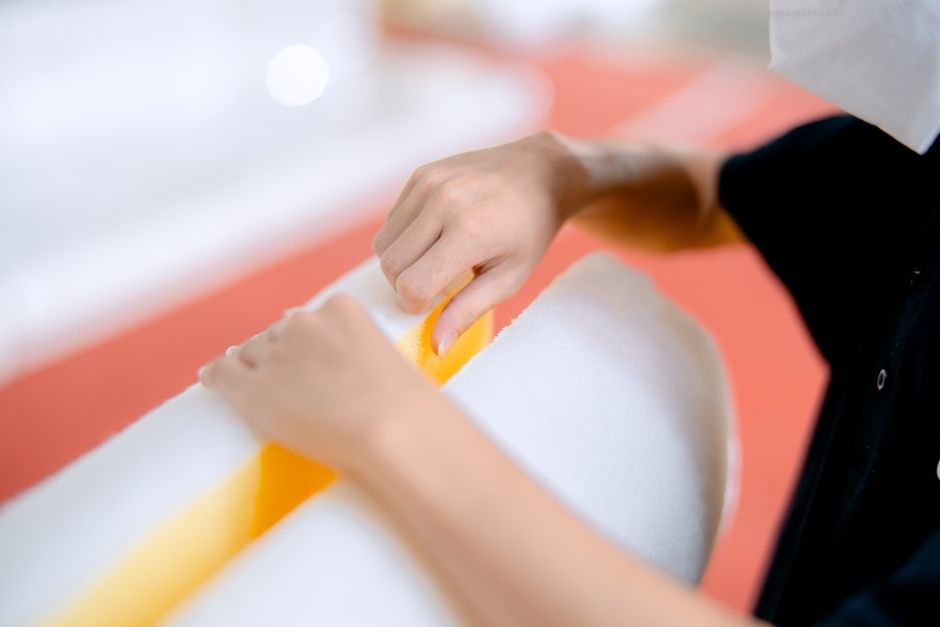
A practical guide for importers on specifying foam density and rebound when choosing a memory foam slippers supplier, including testing methods and red flags.
Most buyers specify memory foam by thickness alone. That is why so many orders feel flat within weeks. If you are dealing with a memory foam slippers supplier, the two numbers that actually determine comfort and durability are density and rebound. Get those wrong and you will see returns, chargebacks, and a product that loses its shape before the season ends. This article explains what to ask for, how to test it, and how to put it in your purchase order so the factory cannot substitute a cheaper foam.
Why foam density specifications matter more than thickness
Thickness tells you how deep the foam is. Density tells you how much material is in it. A 10 mm layer of low-density foam will compress and stay compressed; the same thickness at higher density will recover and last. For slippers, the insole foam is subjected to repeated loading from body weight and foot heat, so density is the best single predictor of how the product will feel after a month of use.
When you talk to a supplier, ask for the foam density in kilograms per cubic meter (kg/m³) or pounds per cubic foot (PCF). Typical memory foam for footwear ranges from around 40 to 80 kg/m³. Lower densities feel soft initially but break down faster; higher densities feel firmer and more supportive. There is no universal “best” number—it depends on your price point and market expectations. But you must specify a number and a tolerance, not just “memory foam.”
Also ask for the foam’s compression set and indentation force deflection (IFD) if available. These give you a fuller picture of how the foam behaves under load. A supplier who cannot provide these basic specifications is likely buying foam on price alone and may not know what is in the slipper either.
How to test memory foam rebound before you commit
Rebound is the speed at which the foam returns to its original shape after being compressed. Good memory foam should recover within a few seconds—slow enough to feel contouring, fast enough to avoid a permanent dent. In the factory, you can test this with a simple hand test: press your thumb firmly into the foam for five seconds, release, and watch how long it takes to return. A foam that stays dented for more than 10–15 seconds is likely too soft or has poor resilience. A foam that snaps back instantly is probably not memory foam at all, but a cheap polyurethane.
For a more objective measure, ask the supplier for a rebound test report. The standard test for flexible foam is a ball rebound test (e.g., ASTM D3574). The result is a percentage; for memory foam, lower rebound percentages (typically under 20%) indicate better contouring. But be careful: you want slow rebound, not zero rebound. A foam that never recovers is dead foam.
Remember that memory foam rebound is affected by temperature. Memory foam softens when warm and hardens when cold. Test at room temperature, but also ask how the foam performs at 10°C and 30°C if your market has cold winters or hot summers. A supplier who has not considered temperature sensitivity may ship foam that feels like a brick in winter.
What to put in your purchase order and how to verify it
Verbal assurances are worthless. Your purchase order should state the foam density (with a tolerance, e.g., ±5%), the rebound requirement (e.g., ball rebound ≤20%), and the test method. Include a clause that allows you to take random samples from bulk production and send them to a third-party lab. The cost of a lab test is small compared to the cost of a failed container.
When you receive samples, cut one slipper open—or ask the factory for an unsewn insole—and measure the foam thickness and weight. You can calculate density yourself if you have a scale and a ruler: density = mass / volume. This gives you a quick check that the foam in the sample matches the spec. If it does not, you have a problem.
Also, ask for the foam supplier’s name and grade. Reputable foam suppliers provide technical data sheets (TDS) that list density, rebound, compression set, and other properties. If your slipper factory cannot produce a TDS, that is a red flag. A good memory foam slippers supplier will have these documents on file and be willing to share them.
Red flags and how to avoid them
The most common trick is to use a thin layer of high-density memory foam on top of a thick layer of cheap polyurethane foam. This feels good in the showroom but collapses quickly because the base foam is low density. To catch this, ask for a cross-section photo or cut a sample. The memory foam layer should be clearly distinguishable, and the base foam should also meet a minimum density (typically at least 25 kg/m³ for polyurethane).
Another red flag: vague answers. If the supplier says “we use high-quality memory foam” without numbers, move on. If they quote a density but cannot explain the test method, be suspicious. If they offer to “adjust” the foam to hit your price without discussing trade-offs, they are likely planning to substitute.
Finally, be aware that foam density specifications are not the only factor in comfort. The foam’s hardness (IFD), the fabric covering, and the slipper’s construction all matter. But density and rebound are the foundation. Get them right, and you have a product that will keep customers coming back.
Practical steps for your next order
Start by defining your target market and price point. A premium hotel slipper may need higher density for durability; a promotional retail slipper may accept lower density if the foam is thick enough to feel plush. But set a floor: for footwear, avoid anything below 40 kg/m³ for the memory foam layer.
Ask your supplier for a technical data sheet and a sample with the specified foam. Test the sample yourself: press, time the rebound, and check for temperature sensitivity. Then lock the specs into your purchase order with a testing clause.
During production, pull random samples and cut them open. If you find deviations, reject the batch. It is cheaper to fix problems at the factory than to process returns later.
Finally, build a relationship with a supplier who is transparent about foam grades. A supplier who educates you and provides documentation is worth more than one who simply quotes the lowest price. For more on evaluating suppliers, see our guide on how to compare OEM house slipper factories in China.