Memory Foam Slippers Supplier: How to Evaluate Quality and Comfort
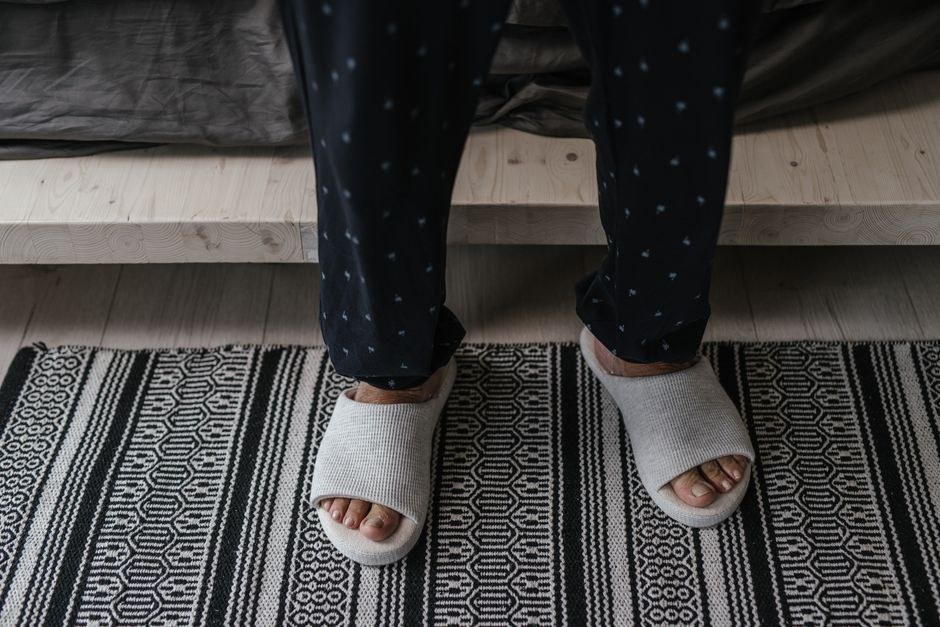
Memory foam slippers live or die on foam density and recovery. Learn how to test a supplier's samples and avoid the spongy, short-lived traps.
The fastest way to spot a weak memory foam slippers supplier is to press your thumb into the footbed and watch what happens next. A good foam springs back slowly but fully; a cheap one either collapses and stays dented or bounces back so fast it might as well be plain EVA. Most buyers skip that two-second test and judge on feel through the packaging, which is how they end up with containers of slippers that customers return after three weeks.
Memory foam is not one material. It is a family of viscoelastic polyurethane foams, and the gap between a good one and a bad one is enormous. Understanding what separates them lets you ask a supplier the right questions and read a spec sheet without being snowed.
What actually makes memory foam good
Three numbers matter more than everything else on a quotation: density, IFD (indentation force deflection), and resilience. Density is measured in kilograms per cubic metre. Higher density generally means more material, better shape retention, and a longer useful life. Low-density foam can feel wonderful in the showroom and flatten within weeks because there simply is not enough polymer to hold the structure.
IFD describes how firm the foam feels under load. A softer IFD is plush and inviting; a firmer IFD supports better for heavier users. Neither is inherently better — it depends on your target customer. A hotel slipper meant for a short stay can be plush and low-density and nobody will notice. A retail slipper sold as a durable home product needs a denser, more resilient core, or you will get complaints.
Ask for the foam grade in writing — density, IFD and thickness — before you ask for a price. A quote without those numbers is not a quote, it is a guess.
How to read a supplier's sample
When samples arrive, resist the urge to judge comfort by squeezing the topper once. Work through a short checklist instead:
- Press a thumb firmly into the footbed and time the recovery. Slow and complete is good. Instant or incomplete is a problem.
- Fold the footbed in half. A quality memory foam flexes without cracking or leaving a permanent crease along the fold line.
- Look at the cut edge. Uniform cell structure suggests consistent mixing; large voids or streaks suggest a rushed pour.
- Weigh the pair. Heavier is usually a positive sign at the same size, because it points to higher density.
- Smell it. A strong chemical odour right out of the bag is normal to a degree, but it should fade within a day or two. If it lingers, ask about the blowing agents and cure time.
- Wear them for an hour on a hard floor, not carpet. Carpet hides a footbed that offers no support.
Do this with at least two suppliers so you have a baseline. One sample tells you nothing; two tell you plenty. If you are comparing a memory foam slippers supplier against a general house slipper factory, the specialist usually wins on foam consistency but may lose on outsole choice — decide which trade-off your channel cares about.
Questions that separate real suppliers from resellers
Many companies quote memory foam slippers but do not make the foam. They buy pre-cut sheets or ready-made footbeds and assemble uppers around them. That is not necessarily bad — it can even be more efficient at small volumes — but it changes what you can customise and where quality problems appear.
- Do you pour the foam in-house, or buy pre-cut sheets? In-house pouring allows density and IFD to be tuned for your order.
- Can you show me a test report for the specific grade you are quoting? If they cannot produce one, assume the grade is aspirational.
- What is the standard thickness, and what is the minimum you can pour? Thinner than about 10 mm and memory foam does little beyond padding.
- How do you prevent the foam from compressing permanently in transit? Vacuum packing and stacking weight both matter.
- What is your stated compression set after repeated loading? This is the number that predicts returns.
A supplier that answers these directly, with numbers, is almost always a supplier that controls its own foam. A supplier that deflects to 'high quality, best price' is usually passing the question back to you because they do not know.
Comfort is a spec, not an opinion
Buyers often talk about comfort as if it were subjective. At the manufacturing level it is not. Comfort comes from the interaction between foam density, IFD, footbed thickness, upper material and the shape of the last. Change any one of those and the slipper feels different.
- Thicker foam increases perceived cushioning but also raises cost and can feel unstable if IFD is too soft.
- A breathable upper reduces heat build-up, which is the single biggest complaint about memory foam slippers in warm climates.
- A structured footbed with a slight heel cup keeps the foam under the foot where it belongs instead of spreading sideways.
- An outsole with some grip matters more than most buyers expect — memory foam plus a slick sole is a fall risk.
If you are developing a private label programme, fix these variables in your specification document. Otherwise every repeat order will drift, and by the third run the slipper will not be the one your customers originally liked.
What to do before you place the order
Start narrow. Pick two or three candidate factories — ideally including a Ningbo slipper factory and at least one supplier outside your usual network, so you are not comparing the same pricing logic twice. Send the same brief to all of them: target retail price, intended use, climate, size range, and your foam expectations in density and IFD terms.
Then order paid samples from each. Yes, it costs money and a few weeks, but it is the cheapest insurance in this business. Test them yourself and, if possible, give them to a handful of people who match your customer profile for a week. Their feedback will tell you more than any lab report about whether the slipper will sell.
Finally, lock the approved sample. Ask the factory to keep a signed reference pair, keep one yourself, and write the foam grade, thickness and upper material into the purchase contract. When the production run arrives, compare it against that reference pair before you release the balance payment. Do that consistently and memory foam stops being a gamble — it becomes a specification you can reorder for years.