Private Label Slippers Packaging: A Buyer's Guide to Boxes and Branding
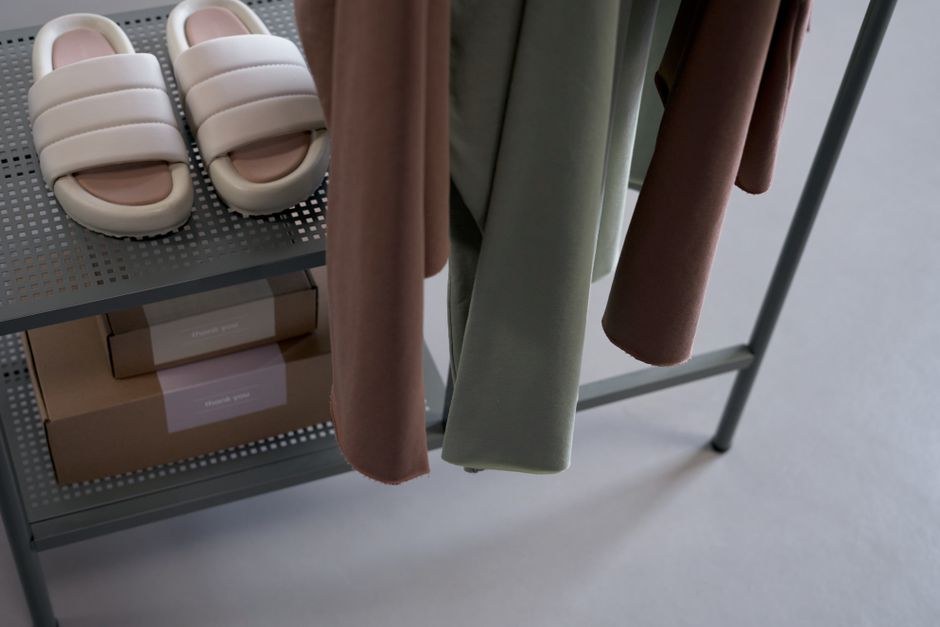
A practical guide to private label slippers packaging: choosing box styles, insert cards and branding details that sell, without overpaying for structure you don't need.
Most private-label slipper programmes lose margin in the same place: the box. Buyers spend weeks on foam density and upper stitching, then approve a rigid two-piece box that adds more to the landed cost than the slipper's insole. If your slippers are headed for a supermarket shelf or a hotel amenity basket, the packaging has to earn its place — and for most private label slippers packaging, that means doing a specific job with the cheapest structure that does it.
Decide what the package has to do before you design it
Packaging fails when it is briefed as a look rather than a task. Three questions settle most of it: Where does the slipper sit at retail — hanging, stacked on a shelf, or inside a gift set? Does the buyer need to touch the product, or is it a sealed unit? And does the pack have to survive a parcel network, or only a pallet to a distribution centre?
A chain that sells slippers on a pegboard needs a Euro hole and a stiffened header, not a rigid box. A hotel buyer ordering amenity slippers usually wants a simple printed poly bag or a light kraft sleeve, because the guest discards the pack on day one. A gifting SKU is the one case where structure genuinely sells the product, and that is where a heavier board can pay for itself.
Write those answers into the brief and a good factory will push back on the box you asked for if it costs more than it needs to. That conversation is worth having early, before tooling and print plates are committed.
Matching slipper box design to the sales channel
For slipper box design, the options below cover most private-label programmes. Each carries a different tooling cost, a different minimum and a different level of protection.
- Folding carton (printed card, glued): the workhorse for retail shelves and e-commerce. Light, cheap to print, flat-packed for freight. Best when the slipper already has a polybag inside.
- Rigid two-piece box: the gift-set choice. Strong shelf presence, but it ships assembled, so you pay for air and board. Justify it only for premium or gifting price points.
- Kraft or corrugated sleeve: a low-cost middle ground for hospitality and spa programmes. Protects without pretending to be luxury.
- Hang tag plus polybag: the leanest option for pegboard and drop-ship sellers. The branding lives on the tag and the bag print.
Ask for a dummy of each option at sampling stage and put it on a table next to a competitor's pack. Most buyers change their mind once they hold the folding carton against the rigid box and see what the extra structure actually buys.
What custom slipper branding actually includes
Buyers often use "branding" to mean the logo on the box, then forget the six other places a customer meets the brand. Custom slipper branding is the sum of all of them, and consistency across those touchpoints is what makes a private label look like a real brand rather than a sticker job.
- Box or bag print: one or two colours is usually enough. Extra spot colours add plate and print cost on every run.
- Insert card: care instructions, size guide and a short brand line. Cheap to add, and it is the piece customers keep.
- Woven or printed label sewn into the slipper itself — the one branding element that survives after the pack is gone.
- Tissue and sticker seal for gift sets; skip them for commodity retail.
- Barcode and compliance marks: importer address, fibre content, country of origin. Missing these is a customs and retail chargeback risk, not a design choice.
Put the full list in the tech pack and let the factory cost each line separately. You will usually find the woven label and insert card together cost less than upgrading from folding carton to rigid box — and they do more for perceived quality.
Where packaging spend goes wrong
The most common mistake is designing the pack for a photoshoot rather than a container. Foil blocking, soft-touch lamination and die-cut windows all look good in a mock-up and all add cost, weight and sometimes a recycling problem in your destination market.
Watch for these specifically:
- Shipping assembled boxes. Rigid boxes take up container space. A folding carton ships flat. On a large order the freight difference is real money.
- Oversized packs. A box that is 20 mm too deep wastes volume on every pallet. Ask for the carton dimension and pack quantity before you sign off the dieline.
- Unclear recycling claims. If the pack says "recyclable" or carries an eco mark, the materials and inks need to back it up in the destination country. Your factory should be able to name the board grade and ink type.
- Late artwork. Print plates are made once. Artwork changes after proofing mean new plates and a delay you will pay for.
A hypothetical mid-size supermarket chain might save more by standardising on one folding carton across three slipper styles than by negotiating a few cents off the slipper itself. Structure variation, not print, is usually the hidden cost.
Practical next steps for your next packaging run
Before you approve artwork, do four things. First, match the pack to the channel and write the job it must do in one sentence. Second, ask the factory for a costed comparison of two or three structures, with tooling, unit price and packing volume for each. Third, get a physical dummy, pack a pair of slippers in it, and drop it once from waist height — the pack that survives without extra filler is the one you want. Fourth, confirm every legal mark the destination market requires and put it on the dieline, not on a to-do list.
Do that and the packaging stops being the line item that erodes your margin. It becomes the part of the programme that carries the brand, protects the product and arrives intact — which is all a private label buyer should ask of a box.