How to Reduce MOQ for Custom House Slippers Without Cutting Quality
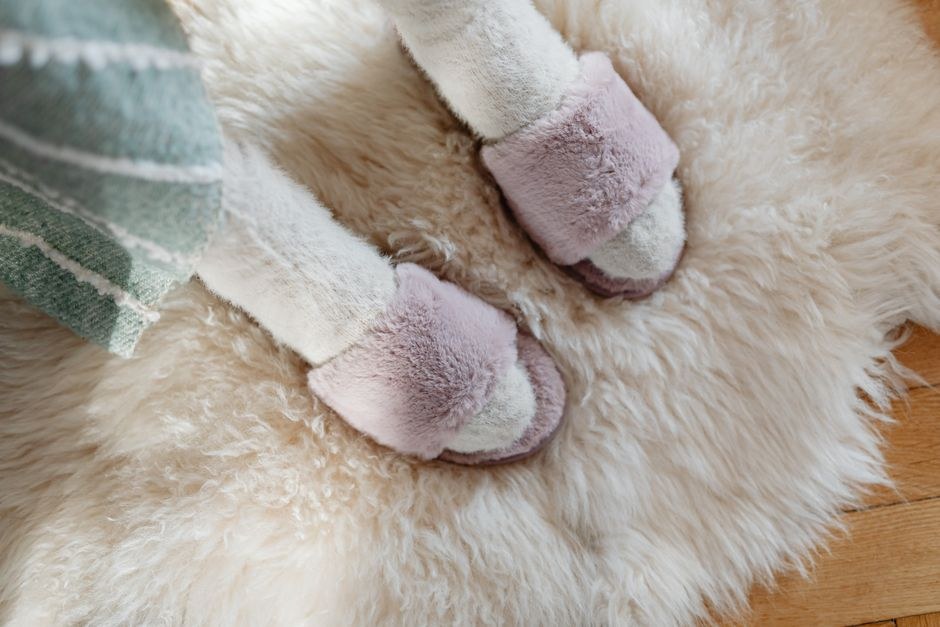
Practical ways importers can lower minimum order quantities on custom house slippers while keeping quality: leverage stock outsoles, shared molds, neutral components and staged orders.
Most buyers who ask about lower MOQs are not trying to be difficult. They are testing a product with a new retailer, launching a private label with a small first run, or hedging against a season that may not perform. The problem is that a factory's quoted MOQ is rarely arbitrary — it reflects setup time, material minimums, and how the production line is scheduled. Understanding which of those you can shift is how you negotiate.
Why the MOQ Exists in the First Place
When a house slipper manufacturer quotes 3,000 pairs per colour and size run, that number covers more than fabric. It amortises the cost of cutting dies, printing plates for packaging, thread and trim orders, and the changeover time on the sewing floor. A factory producing 3,000 pairs an hour cannot stop the line for a 300-pair trial without upsetting every other order in the queue.
So the real question is not "can you lower the MOQ?" but "can we remove the parts of this order that force a high minimum?" That reframing is what opens up options.
Strategies That Actually Lower Minimums
None of these are tricks. They are trade-offs, and each gives something up in exchange for a smaller run.
- Use existing outsoles and molds. Sole development is often the single largest fixed cost. If you accept a sole pattern already in production — even one you didn't design — your MOQ can drop dramatically because there is no tooling to amortise.
- Choose stock materials over custom-dyed ones.
- Split sizes instead of colours. Factories think in pairs and size runs. A range of S/M/L/XL in one colour is often easier to schedule than three colours in one size. If your retailer needs colour choice, ask whether SKU count can be reduced rather than order volume.
- Accept shared production windows. If your slippers can be slotted alongside a similar existing order, you inherit the lower changeover cost. You lose a little control over your exact delivery date.
- Use neutral packaging. A plain poly bag with a sticker or a generic box is many times cheaper at low volume than a printed mailer with four-colour branding. For a first run, this is the easiest lever.
- Order in tranches. Some factories will accept a lower first order if you commit in writing to follow-on volumes at agreed intervals. You get a trial quantity; they get pipeline visibility.
Not all of these apply to every product. Hotel and spa slippers, for example, are usually made from lower-cost materials and standard patterns, so the MOQ is often lower to begin with. A memory foam slippers supplier working with moulded soles has more constraints, because the mould is the asset.
What You Should Not Compromise On
Lowering volume is fine. Lowering quality on the three points below is not, because these are what your end customer feels on day one and after three washes.
- Foam density and resilience. A low-grade memory foam that collapses after a month will generate returns far exceeding whatever you saved on the smaller order. Ask for a sample that has been compressed and left to recover.
- Sole bonding. This is where cheap slippers fail. A sole that separates at the toe or heel ends the product's life quickly. If you are using an existing mould, that is usually safe; if someone is gluing a sole to a new upper, inspect a batch.
- Upper stitching on stress points. The point where the strap meets the sole takes the most wear. Ask to see how that junction is reinforced.
Everything else — colour, trim, embroidery, packaging — is negotiable against volume. These three are not.
The Conversation to Have With Your Factory
When you contact a Ningbo slipper factory or any other supplier, do not open with "what is your lowest MOQ?" That invites a number pulled from nowhere. Instead, lead with your actual plan.
Say something like: "We are launching a private label line with a mid-size regional retailer. The first run is 800 pairs. Can we produce this using your existing sole tooling and stock fleece, with neutral packaging? If the sell-through is good, we would look at 5,000 pairs for the next season."
With that brief, a good factory can tell you what is possible and what is not. A factory that simply refuses to discuss it is telling you something, too — they are not set up for smaller runs, and pushing them will produce inconsistent quality.
The buyers who get the best terms at low volume are not the ones who push hardest on price. They are the ones who make themselves easy to schedule.
Custom house slippers with lower minimums are realistic, but they come from flexible design choices, not from a factory that magically ignores its own costs. The decision set is simple: which components do you accept as standard, and which are worth paying a higher minimum to customise? Answer that honestly and the quantity usually falls into place.