How to Reduce Slipper MOQ Without Losing Quality or Customization
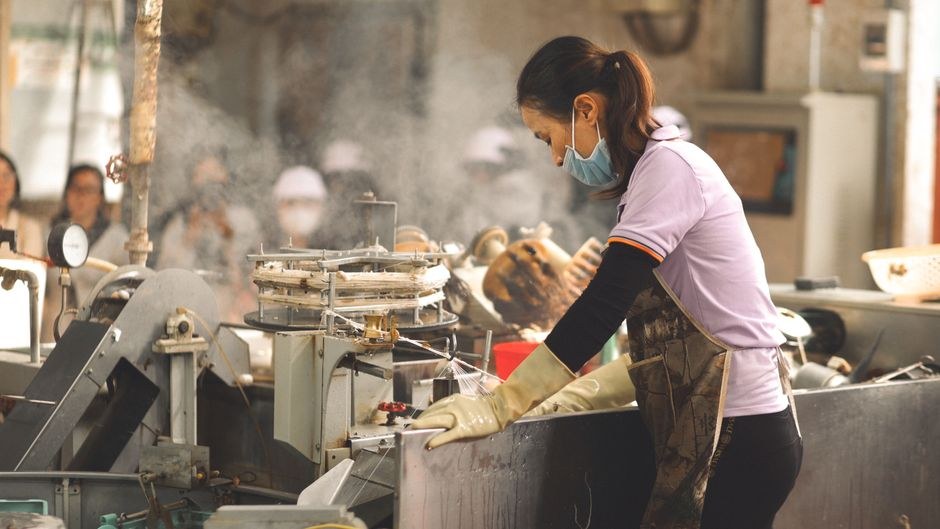
Practical strategies to reduce slipper MOQ: shared tooling, standard components, phased orders and colour pooling—without trading away quality or your brand's point of difference.
If a factory says its MOQ is 3,000 pairs per style, that number is rarely a physical limit. It is an economic one—the point at which the factory's setup, materials buying and line time still make money. Once you understand which costs sit behind the MOQ, you can attack them individually and reduce slipper MOQ without accepting weaker materials or a generic product.
Start with the real cost of a small run: tooling, materials and line time
A slipper order carries three fixed-cost blocks before a single pair is packed:
- Tooling and setup. Cutting dies, sole moulds, embroidery frames, print screens and sewing-line changeovers. Some are one-time; some repeat every time the style returns.
- Material minimums. Fabric, foam and outsole compounds are bought in rolls, sheets or batches. A mill may not weave or a foam plant may not pour less than a set quantity.
- Line time. A production line needs a certain number of pairs to reach a sensible efficiency. Below that, the factory either loses money or prices the order up.
Each block behaves differently. Attack tooling by sharing it, materials by pooling orders, and line time by phasing. Buyers who treat MOQ as one number usually end up paying a premium; buyers who break it down usually negotiate on the item that actually drives the cost.
Shared tooling and standard components: the quickest way to lower MOQ slippers
The most effective route to lower slipper MOQ is to design around tooling that already exists. A factory running a range of EVA soles, for example, can often use an existing mould for your order rather than cutting a new one—saving both the tooling charge and the minimum production run that comes with a new mould. The same applies to cutting dies for the upper, insole shapes and packaging dielines.
Standard components do not have to mean a boring product. If you start from the factory's proven sole and insole platform, your customisation moves to the upper fabric, colour, trim, lining and brand label—areas where your buyer actually notices a difference. That approach lets you keep a distinctive product while avoiding the tooling minimum that a brand-new sole shape would impose. In practice, slipper MOQ reduction usually comes from this kind of substitution, not from asking a factory to accept a loss.
If your design calls for a new sole mould, expect the MOQ to reflect it. If it uses an existing mould, ask what the order minimum really drops to.
Pool colours and sizes, and phase the order instead of cutting it
Material minimums are often the more stubborn constraint. A fabric mill may not produce less than a set length of a specific colour, and a foam supplier may have a minimum batch for a particular density. There are two ways to work with this:
- Colour pooling. Pick colours the factory already stocks or runs regularly. A neutral range—charcoal, oatmeal, navy, grey—gets you a lower fabric minimum than a bespoke Pantone shade matched to your logo. Keep the bespoke colour for a hero style and use stock colours for the rest of the range.
- Phased orders. Split the initial run into two shipments from the same production plan. The factory still buys materials once, which helps its material minimums, but you commit less cash upfront. Make sure the second phase is confirmed with a firm date, not left open, or you lose the volume discount.
Size runs are a separate lever. Sizing down a full run to a smaller size curve—say, only the two or three sizes that actually sell in your market—reduces the minimum per size without reducing the total order. It is worth reviewing last season's sales before you lock the size run into the PO.
Protect quality while shrinking the order
The risk with a smaller run is that corners get cut where you cannot see them: a thinner insole, a lighter fleece, a shorter stitch density. Guard against this by writing the material specs into the purchase order and sampling from the actual production batch, not a hand-made counter sample. For memory foam, specify density and rebound; for non-slip outsoles, specify the compound and ask for a slip-resistance test report. These are not price items—they are quality control items, and they cost you little to insist on.
It also pays to set expectations on inspection. A smaller order is easier to inspect fully, so use that advantage: agree on an AQL level before production and inspect at the point where defects are cheapest to fix. A factory that resists a clear inspection plan on a low-MOQ order is telling you something about how it plans to make the goods.
What to do before you send the next RFQ
Before you ask for quotes, prepare three things: a list of which design elements require new tooling and which can use existing tooling, a defined size run based on your actual sales, and a clear statement of which materials are fixed specs. Then ask each factory to quote the same order in two phases and in one, so you can see whether the lower MOQ still holds its price per pair.
Finally, treat MOQ as a partnership term rather than a hurdle. Factories give their best pricing and flexibility to buyers with a realistic reorder plan, because a low first order that becomes a regular programme is worth more than a one-off large order. If you can show a factory a twelve-month schedule—even an indicative one—you have a stronger case to reduce slipper MOQ than a buyer who simply asks for a smaller number. That is the practical route: understand the cost blocks, design around existing tooling, pool what can be pooled, and phase the rest. None of it requires you to accept a worse slipper.