Slipper Cost Breakdown: What OEM House Slipper Factories Charge For
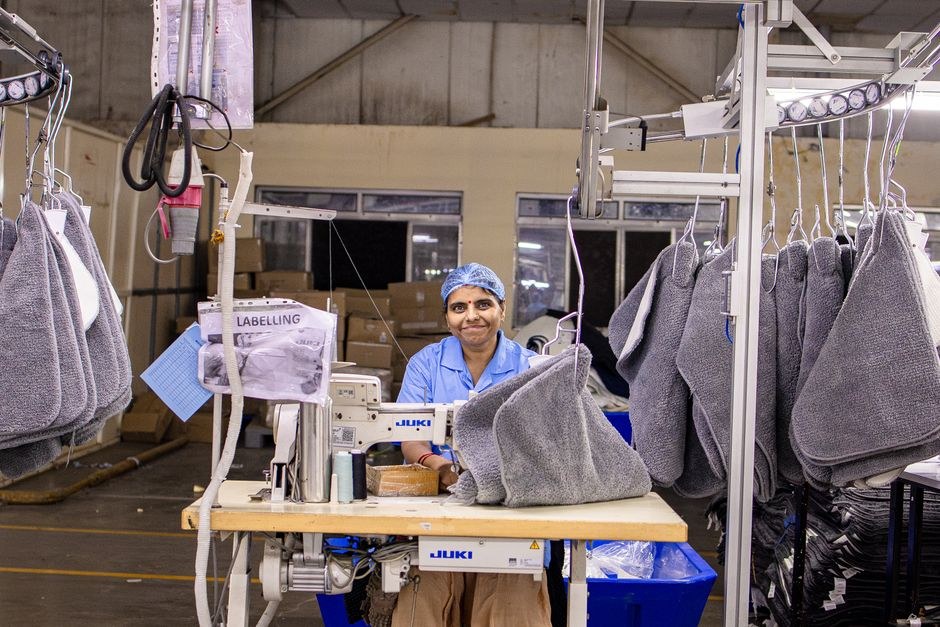
A line-by-line look at what goes into an OEM house slipper factory quote — materials, labour, tooling, packaging and margin — so buyers can read a quote properly.
Most buyers open a slipper quote and go straight to the unit price. That is the wrong place to start. The number at the bottom is a sum of six or seven cost blocks, and until you know how each one is built, you cannot tell whether a quote is competitive or whether someone has quietly padded the tooling to protect their margin. Ask any experienced OEM house slippers factory to break a quotation into its components and you will get a much more useful conversation than a straight price negotiation.
What follows is the standard cost anatomy we use on this side of the table. It is not a pricing formula — every factory weights things differently — but it is the map you can use to read any quote you receive.
Materials: the largest and most volatile block
Materials usually account for the biggest share of a slipper's cost, and they are the line item most sensitive to world prices. For a cotton house slipper, the upper fabric, lining and any interlining are quoted by the metre or by weight. For a plush or fleece model, the pile fabric is usually quoted by weight per square metre, which is why two visually similar samples can sit far apart on price.
The other material costs buyers often underestimate:
- Memory foam inserts — density and rebound grade matter more to price than thickness. Cheap foam compresses flat in a season; better foam costs a little more per pair and saves you returns.
- Sole material — EVA, TPR, rubber or fabric-backed non-slip. The sole is often a fixed cost per pair and rarely negotiable once the mould is chosen.
- Trims — piping, embroidery, woven labels, heat-transfer logos. Each one adds a small amount and a lead time, and each one is a place where quotes vary.
- Adhesives and stitching thread — small money, but a frequent cause of quality complaints if downgraded.
When a quote comes in unusually low, check the materials line first. It is almost always where the difference lives.
Labour, tooling and setup: the one-time costs
Cutting, stitching, lasting and finishing are quoted per pair or as a per-style labour charge. Labour is comparatively stable in Ningbo compared with inland provinces, but it is not free — factories with higher retention and better training cost slightly more per pair and produce far fewer rejects. That trade-off is usually worth taking for retail programmes.
Tooling and setup is the block buyers misread most often. It covers:
- Sole moulds or die cutting tools, charged once per sole design.
- Pattern making and grading, if the style is new to the factory.
- Sample development — first samples, fit samples, pre-production samples.
- Printing screens or embroidery programmes for logos.
Tooling is a fixed cost. On 3,000 pairs it looks heavy; on 30,000 pairs it disappears into the unit price. This is why two factories can quote the same style very differently — they may be assuming different order quantities. Always ask which MOQ the quote is based on.
Packaging: where private label programmes separate
Packaging is the cost block that changes most between a generic order and a private label slipper programme. A plain polybag and a hangtag is one price. A printed box, an insert card, a branded woven label and individual tissue wrapping is another price altogether — and it can add a meaningful percentage to the landed cost of each pair once cartons get bigger and container fill drops.
Useful things to specify before you ask for a quote:
- Do you want retail-ready boxes or bulk cartons?
- How many pairs per inner box and per export carton?
- Is the label sewn in, printed on, or applied as a sticker?
- Are you supplying artwork, or should the factory quote design work too?
Getting this wrong does not just change the price — it changes your container loading and your distribution centre receiving costs.
Overheads, margin and payment terms
Every quote carries an allocation for factory overheads — rent, utilities, management, quality staff, compliance audits — and a margin. This is not padding; a factory that skips it cannot fund the next mould or absorb a rejected shipment. What you should watch is consistency: a factory that quotes a razor-thin margin on one style and a fat one on the next is testing you.
Payment terms belong in this block too. A 30/70 split against a bill of lading is normal. A request for a large cash deposit with no inspection clause is not, and it usually signals a factory short of working capital rather than a genuinely better price.
Read a slipper quote like a bill of materials, not a price tag. The factories worth keeping are the ones happy to show you the working.
How to use this when you compare quotes
Put the quotes side by side in the same categories — material, labour, tooling, packaging, freight, margin — and ask each factory to fill in the gaps. The exercise alone will tell you a lot about which suppliers actually understand their own cost structure.
Then narrow the comparison to three questions. First, does the quoted MOQ match the tooling assumption? Second, is the material specification written down (fabric weight, foam density, sole compound), or just described in words? Third, does the packaging line meet the brief you gave, or has the factory assumed something simpler?
If a number still looks off, ask what would have to change to hit a lower target — a lighter foam, a simpler sole, a larger quantity, or a longer production window. A good manufacturer will answer with options rather than a refusal. That, more than the initial figure, is the sign you have found a partner worth quoting with again.