Slipper Factory Capacity: Checking Ningbo Production Slots
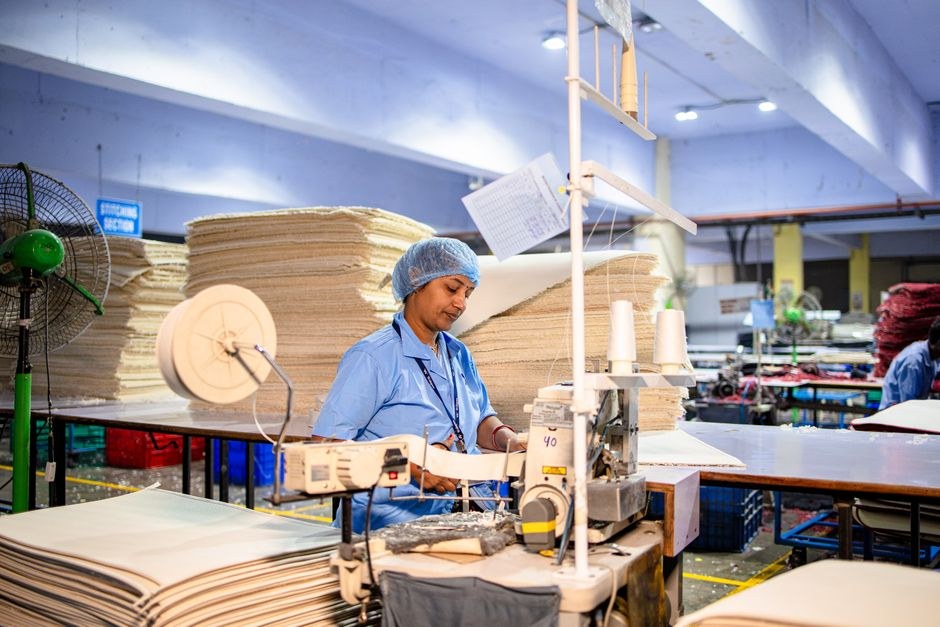
A practical guide to reading production capacity and peak-season booking slots at a Ningbo slipper factory, so you can secure line time before you commit to an order.
Most buyers ask a factory how many pairs it can make per month, get a number, and treat it as a promise. It is not. A monthly output figure is an average, and averages hide the only thing that matters when you are booking: whether the line has a free slot in the week your goods need to run. Before you commit to a Ningbo slipper factory, you need to read its schedule, not its brochure.
Start with the real line, not the total output
Production capacity is not one number. It is a set of constraints: how many sewing lines run, how many sole-pressing machines are staffed, how the factory handles insole cutting and foam molding, and how many workers are on the floor in a given week. A factory that quotes 200,000 pairs a month may have the machines for it but only enough trained operators for half that in peak season, when it is also running two other clients' orders.
Ask a different question: “How many pairs did you ship last month, and how many of those were one SKU versus mixed?” Mixed-SKU orders consume more slots than a single-style run because of changeovers. Slipper factory capacity is usually quoted for a single style on a dedicated line, which is not how most private-label orders actually run.
A factory that sells mostly hotel slippers, for example, will run fewer color changes than one producing retail gift sets for a mid-size supermarket chain. Both may quote the same monthly output, but their ability to fit your order in Dec–Feb or Jul–Sep differs sharply. Keep the comparison grounded in the types of orders you bring.
Map the booking slot, not the order volume
Capacity is consumed by time, not by the total number of pairs. The question that unblocks a schedule is: which production week are you booking, and how many units can run before the line hits the next change? That is why two buyers with identical order quantities can get very different lead times. One booked in a quiet week; the other wanted the three weeks before peak.
- Ask for the factory's block plan for the next eight to twelve weeks, by line, not just a delivery date.
- Clarify whether your order shares a line with other styles and, if so, what the changeover time adds.
- Confirm which weeks are already reserved by other clients and which are held for sampling or tooling trials.
If you are dealing with a Ningbo slipper factory that runs sampling lines alongside production, ask whether the same people who make your first sample will be freed up when bulk runs. Often the sample room is staffed separately, and the first production batch behaves differently from the approved prototype. That distinction belongs in your planning, not in a quality complaint later.
How peak season changes the math
House slippers are seasonal goods, and most factories carry the same pattern: quiet in spring after the Christmas shipments, then booked solid from July to October as autumn and winter stock builds, and again tight in late November for replenishment or smaller holiday orders. In those windows, the difference between a 2,000-pair and a 4,000-pair order is not price per pair — it is whether the line can fit you at all.
This is where buyers mismatch expectation and capacity. The most common request we see from a house slipper manufacturer China quote sheet is for a low MOQ, fast lead time, and a peak-season delivery. Those can be satisfied at the same time for only a handful of clients, usually those who committed early or who built a relationship across the previous season. If you are new, either book early or accept a slot after the peak run, when the line is quieter and turnarounds reset.
A practical rule: for any order that must hit shelves before a major season, confirm your production slot four to six months ahead. If your order is a reorder of an approved design, you have more room, but do not confuse an existing relationship with a guaranteed booking — check the slot each season, because factory staffing changes with demand.
Booking tactics that actually work
You are not negotiating over price only, you are negotiating over production time. A few tactics fit the usual buyer reality:
- Offer split shipping. If the line is tight, ask for your order to be split across two production slots, one before and one after peak, so the factory can pack you into the gaps. Many buyers reject this too quickly; a 60/40 split can preserve your retail launch without forcing the factory to overbook.
- Lock the sample approval date first. Capacity is consumed by approved designs, not by polished tech packs. Factories often hold a provisional slot for a brief, but they book firm once the sample is signed. Set the criteria and deadline early so your slot does not fade.
- Ask what happens if another client cancels. In each factory there is a short list of “maybe” slots that open late. If you are flexible on color or packaging, you can sometimes take one — but you have to be told, which means staying in contact as the production week approaches.
- Track the booking confirmation, not the order confirmation. An order confirmation fixes price and quantity; a booking confirmation fixes the week. They are different documents, and the second is the one your retailer needs.
Keep a simple record for each supplier: the quoted weekly output, the number of active lines, the peak-season slot you were offered, and the date it was confirmed. Next season that record tells you which factory behaved as promised, which is more useful than any single audit report.
Use the schedule as your filter
When you shortlist factories, ask for their booking availability for your target week before you invest time in price negotiations. A factory that cannot book your week is not a better option because it is cheaper per pair; it is a risk that lands as a late shipment. For most importers, a workable slot at a slightly higher unit price beats a low quote with no confirmed production window.
Start your next order with one question: “Which week can you hold the line for me, and what must I have approved by then?” The answer tells you more about a supplier's real capacity than any monthly figure on a catalogue. And if you want that slot kept firm, treat the sample approval and the booking confirmation as the two deadlines that run the whole project.