Slipper MOQ Explained: How Order Volume Affects Price and Customization
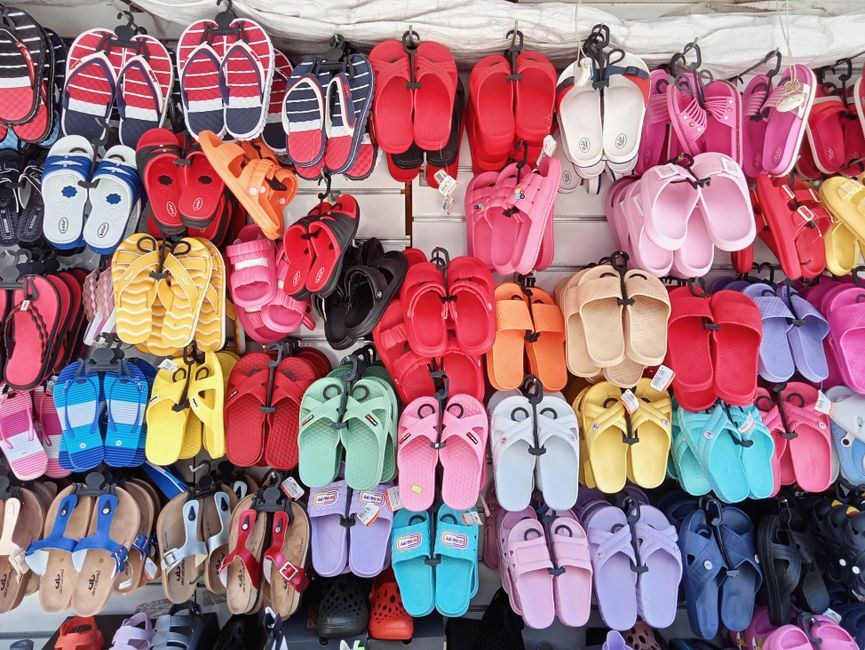
Understand how slipper MOQ shapes unit price and customization options. Practical advice for importers to find the right order quantity and negotiate better terms.
Most buyers treat slipper MOQ as a single number to beat down. That is a mistake. MOQ is the hinge on which both your per-pair cost and your customization options swing. Push it too low and you lose the ability to choose materials, colors, or packaging. Push it too high and you tie up cash in inventory that may not sell through. The smart move is to understand the mechanics, then pick an order size that matches your sales plan and your risk tolerance. This guide gives you the framework to do exactly that.
Why Slipper MOQ Exists and What It Really Covers
Factories in Ningbo and elsewhere set minimum order quantities for one reason: setup cost. Every new order triggers expenses that are largely fixed regardless of volume — material minimums from fabric and foam suppliers, cutting-die changes, machine programming, line changeovers, and quality checks. When you order below a certain threshold, those fixed costs get spread over fewer pairs, and the factory either loses money or quotes a price you won’t like. The MOQ is simply the volume at which those costs are recovered without penalizing either side.
Understanding what’s inside the MOQ helps you negotiate. For example, a supplier might quote 1,000 pairs for a stock style but 3,000 pairs for a custom outsole. The difference isn’t arbitrary; it reflects the cost of a new mold or a dedicated production run. If you know that, you can ask targeted questions: Which component drives the MOQ? Can we use an existing mold to lower it? That conversation is far more productive than simply demanding a lower number.
How Slipper Order Quantity Moves the Unit Price
As order volume increases, the per-pair price generally falls, but not in a straight line. The first price break usually comes when you move from sample-level quantities to a small production run. A second, more meaningful drop often occurs when you cross into volumes that let the factory buy raw materials more efficiently and run longer production cycles. Beyond that, further increases yield diminishing savings.
Think of it like this: say a mid-size retailer tests a new style with 600 pairs. The unit price might be noticeably higher than at 2,000 pairs because the factory still has to cover setup and small-lot material surcharges. At 5,000 pairs, the savings compared to 2,000 might be modest — perhaps a few percent — but the cash commitment is much larger. The key is to identify the volume where the price curve flattens and your inventory risk becomes uncomfortable. That’s your natural order size.
Don’t chase the lowest possible unit price in isolation. A slightly higher per-pair cost at a volume you can actually sell is almost always more profitable than a rock-bottom price on stock that sits in the warehouse.
Customization Tiers: What Each MOQ Level Unlocks
Customization is not a binary yes/no; it comes in tiers tied directly to order volume. Here’s how the trade-off typically plays out:
- Low volume (e.g., 300–500 pairs): Usually limited to stock colors, existing materials, and perhaps a simple logo print or woven label. Packaging may be a standard polybag or a stock box with a sticker. Slipper MOQ at this level is achievable for test orders, but your design freedom is minimal.
- Mid volume (e.g., 1,000–2,000 pairs): You can typically choose from a wider range of upper materials (cotton, plush, memory foam), select custom outsole colors from existing molds, and specify branded packaging like a printed box or hangtag. This is the sweet spot for many private-label brands launching a new line.
- High volume (e.g., 3,000+ pairs): Opens the door to fully custom tooling (new sole molds), unique material development, complex packaging (rigid boxes, gift sets), and dedicated production runs. The higher slipper order quantity justifies the investment in exclusivity.
When you discuss customization with a supplier, ask which tier each requested feature falls into. Sometimes a small design tweak — like using an existing outsole instead of a new one — can drop your MOQ significantly without hurting the product’s appeal.
Finding Your Optimal Order Size: A Practical Framework
Your optimal order size sits at the intersection of three factors: demand forecast, cash flow, and customization needs. Start by estimating realistic sell-through for the season. If you’re unsure, lean toward the lower end. It’s easier to reorder than to liquidate.
Next, map your must-have custom features to the MOQ tiers above. If a custom outsole is non-negotiable, you may need to commit to a higher volume; if you can live with a stock sole and custom upper, your MOQ drops. Then run the numbers: calculate the landed cost per pair at different volumes (including freight and duties) and compare that to your expected selling price. The volume that gives you a healthy margin without excessive leftover stock is your target.
Finally, consider the reorder cycle. A slightly higher initial order that secures better pricing and priority production can be worth it if you’re confident in repeat business. But if the style is unproven, a smaller test order — even at a higher unit price — is the smarter risk.
Negotiating MOQ and Price: What to Ask For
Negotiation isn’t about demanding a lower MOQ; it’s about finding creative ways to align your needs with the factory’s cost structure. Here are approaches that often work:
- Ask about mixing sizes or colors within one order to reach the MOQ — many factories allow this if the materials are the same.
- Propose a two-tier order: a smaller first run at a slightly higher price, with a committed follow-up order that brings the average volume up.
- Offer to use stock components (sole, lining) to reduce setup costs, thereby lowering the MOQ.
- Be transparent about your sales plan and ask the factory to suggest the most efficient order size for your budget.
Remember that slipper unit price and MOQ are linked; every concession on one side usually has a price tag on the other. A factory that drops its MOQ significantly may need to add a small-lot surcharge, which is fair if it’s transparent.
Actionable Steps for Your Next Slipper Order
Before you request quotes, define your non-negotiables and your flexibilities. Know which custom features you truly need and which you can compromise on. Then ask each supplier to break down their price by volume bracket — for example, 500, 1,000, 2,000, and 5,000 pairs — so you can see exactly how the unit price moves. This transparency lets you compare suppliers on equal footing and spot where the real cost drivers are.
Start with a volume that matches your conservative sales forecast, and negotiate a price that reflects the value of a long-term partnership, not just the first order. Keep the conversation open about future volumes; factories are more willing to work with buyers who plan to scale. And always verify that the quoted MOQ includes the customization you need — a low MOQ means little if it strips away the features that make your product sell.
Ultimately, the right order size is the one that balances competitive pricing, sufficient customization, and manageable inventory risk. Get that balance right, and you’ll build a supply chain that supports growth instead of straining it.