Slipper Quality Control Plan: Building a Custom Slipper Inspection
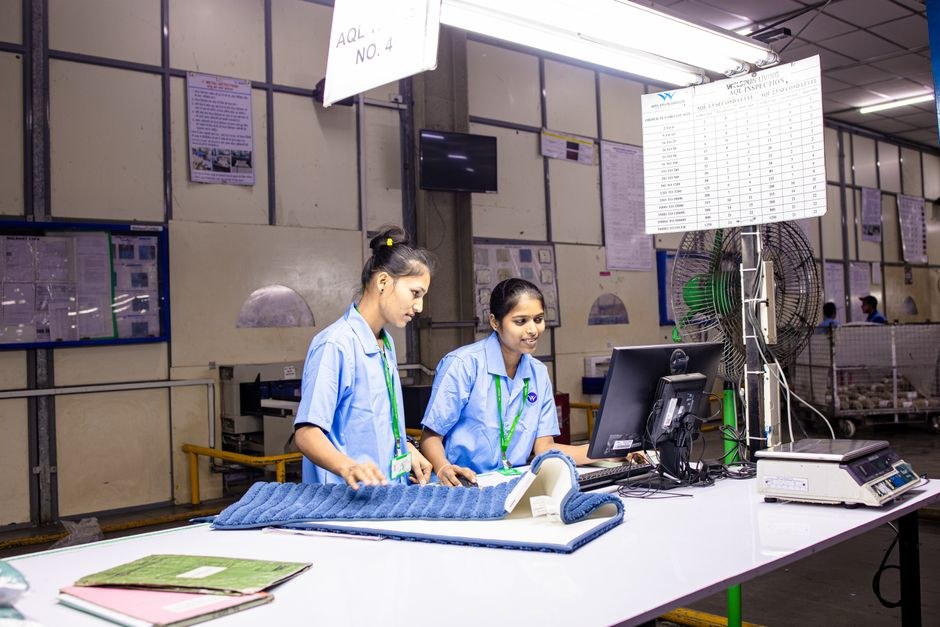
A practical guide to building a slipper quality control plan for custom orders: checkpoints, AQL levels, testing, and factory communication.
Most slipper orders don't fail because the factory can't sew. They fail because nobody wrote down what “good” looks like. A slipper quality control plan fixes that — not with a vague instruction to “check quality,” but with a fixed set of checkpoints, sample sizes and pass/fail limits agreed before the first pair is cut. Buyers who skip this step tend to discover problems at the loading dock, when the only remaining option is a discount and a bad season. Building a plan takes a day of work and pays for itself on the first bulk run.
Map Your Checkpoints Before You Set Limits
Every custom slipper order moves through five natural checkpoints. Each one catches a different class of defect, and each costs less to fix than the one after it.
- Incoming materials — fabric weight, pile direction, foam density, sole hardness, thread and glue batches. A batch of foam that is 10% lighter than spec will show up later as a collapsed insole, but it is cheapest to reject here.
- First article — the first pair off the line, compared side by side with the approved golden sample. This is where you catch a pattern that has drifted or a lining that was cut from the wrong roll.
- In-line inspection — spot checks during assembly, focusing on stitching density, seam alignment and sole bonding. You are not counting defects; you are stopping a systematic fault from running through the whole batch.
- Pre-shipment inspection — the main event. This is your formal custom slipper inspection, done on finished, packed goods, using the AQL levels you agreed.
- Pre-loading — carton count, carton condition, shipping marks and packing configuration. Quick, but it is the last chance before the container leaves.
A common mistake is skipping the first three and relying entirely on pre-shipment. By then, the defects are already in the boxes. The earlier checkpoints are not bureaucracy; they are where the cost is still small.
Set AQL Levels and Write Down the Defect List
Most buyers default to AQL 2.5 for major defects and 4.0 for minor. That is a reasonable starting point for house slippers, but the real work is defining what counts as major and minor for your product. If you leave that to the inspector, you are leaving your brand standards to a stranger's judgement.
Start with the defects that actually hurt your customer, then work backwards. A crooked label on the insole is minor. A sole that peels after two weeks is critical. A size mismatch inside a carton is major because it creates a return at retail. Sit with your factory and write the list together, then attach it to the purchase order. The debate you have now is much cheaper than the one you will have over a rejected shipment.
Sample size follows from the AQL level and the lot size, so you cannot fix one without the other. For a first bulk order, many importers tighten the level to 2.0 for major defects and keep 4.0 for minor ones. It costs a little more inspection time and sends a clear signal about what you expect.
Test the Things You Cannot See
Visual inspection will not tell you whether the memory foam will recover, whether the sole grips on a wet tile, or whether the dye will bleed in the wash. Those need physical testing, and the honest conversation is about which tests are worth paying for on every order and which belong in a periodic check.
- Foam density and rebound — a simple compression test on a cut sample, run periodically or whenever the foam supplier changes.
- Sole slip resistance — especially important for non-slip ranges and hotel slippers. Ask for the test standard your market recognizes and keep the report on file.
- Colourfastness and shrinkage — for cotton and fleece uppers, a wash test catches problems that no visual check will.
- Bonding strength — a pull test on the sole-to-upper joint is the fastest way to find a glue problem before your customers do.
Put the tests you require in the house slipper QC section of your order documents. If the factory only runs them when asked, they will not run them when you forget to ask.
Choose Who Does the Inspecting
You have three realistic options: the factory's own QC team, a third-party inspection company, or a mix of both. None is universally right. Factory QC is faster and cheaper, and with a long-term partner it can be reliable. Third-party inspection gives you an independent record and is worth the fee on high-value, high-risk or first-time orders. The mix — factory checks at every checkpoint, third-party pre-shipment — is what most experienced importers settle on.
Whichever you choose, insist on a written report with photos, not a phone call saying “all good.” A report you can compare across orders is how you spot a slow decline in stitching quality or a change in foam.
Make the Plan Work on the Next Order
The best quality control plan is short enough that the factory actually uses it. Keep it to one or two pages: the checkpoints, the AQL levels, the defect list and the test schedule. Attach it to every purchase order, and review it after each shipment. If a defect slipped through, add it to the list. If a test never caught anything in three orders, consider dropping it or moving it to an annual check.
Before you place your next order, do three things: get the sample approved and signed by both sides, agree the defect list in writing, and book the pre-shipment inspection date at the same time you confirm the production schedule. That last step matters more than it sounds — inspections get squeezed when production runs late, and a rushed inspection is barely better than none. A modest, disciplined plan beats an elaborate one that nobody follows.